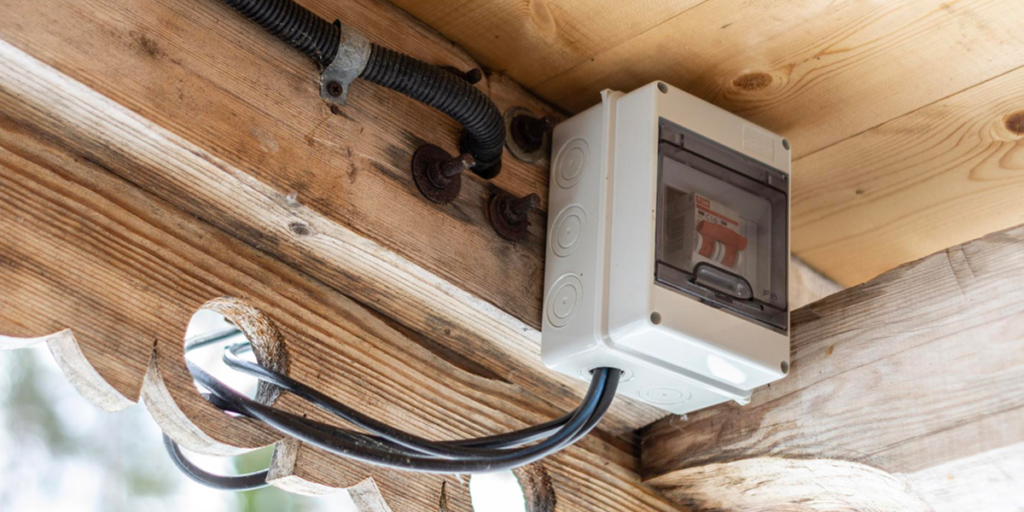
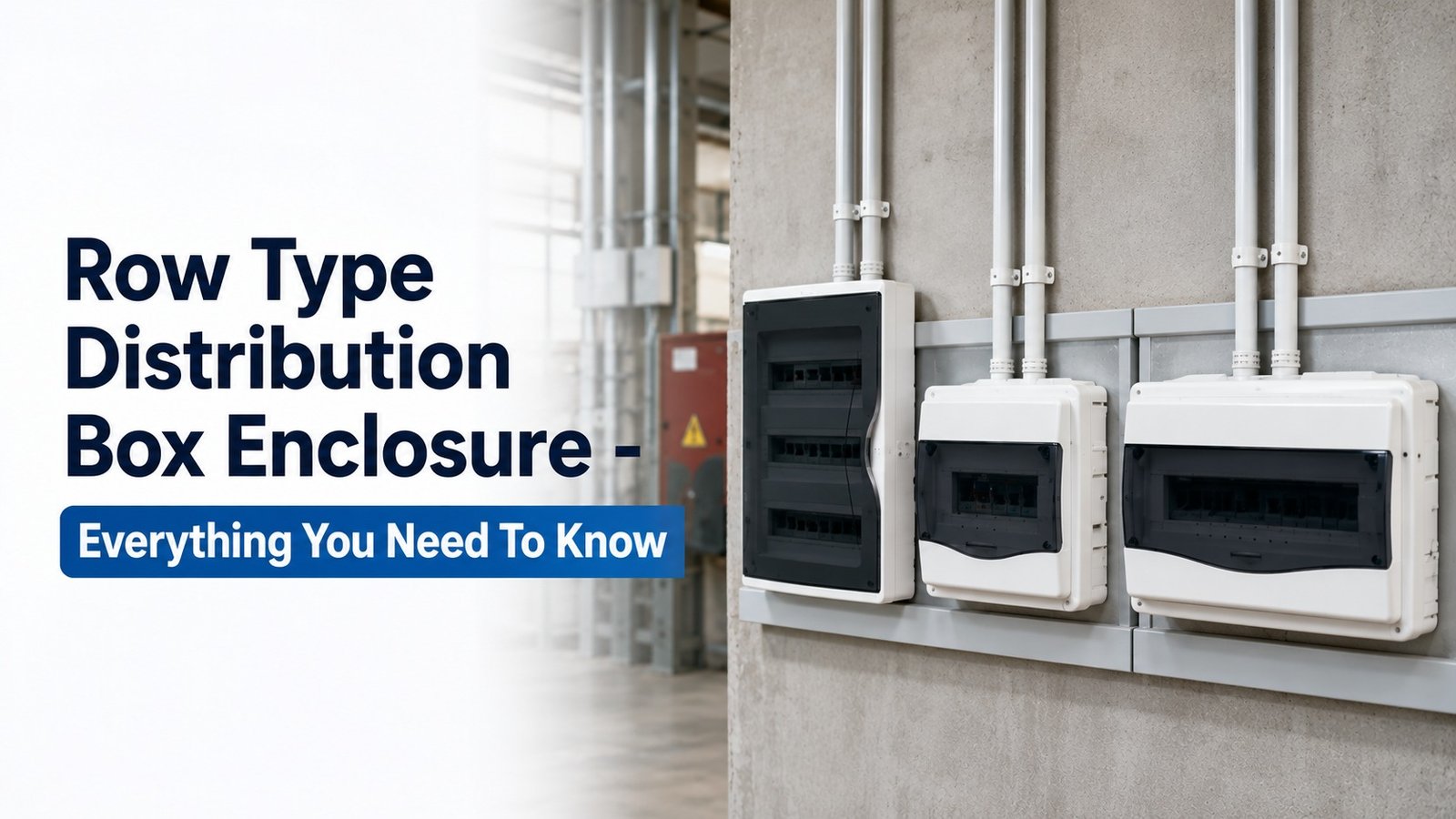
A row type distribution box enclosure is a housing that holds electrical protection and switching devices in horizontal rows. It protects the equipment inside while also giving you a clear layout for wiring and maintenance.
Choosing a right enclosure is more than matching the size to your electrical components. You must consider factors such as row and module capacity, single-phase or three-phase compatibility, mounting style, metal construction, dimensions, and available cable space to ensure it meets your project’s requirements.
An enclosure is not the same as a full distribution board. A finished board usually adds breakers, busbars, terminals, and wiring. This guide focuses on the enclosure itself and how to pick the right one for your project.
What Is a Row Type Distribution Box Enclosure?
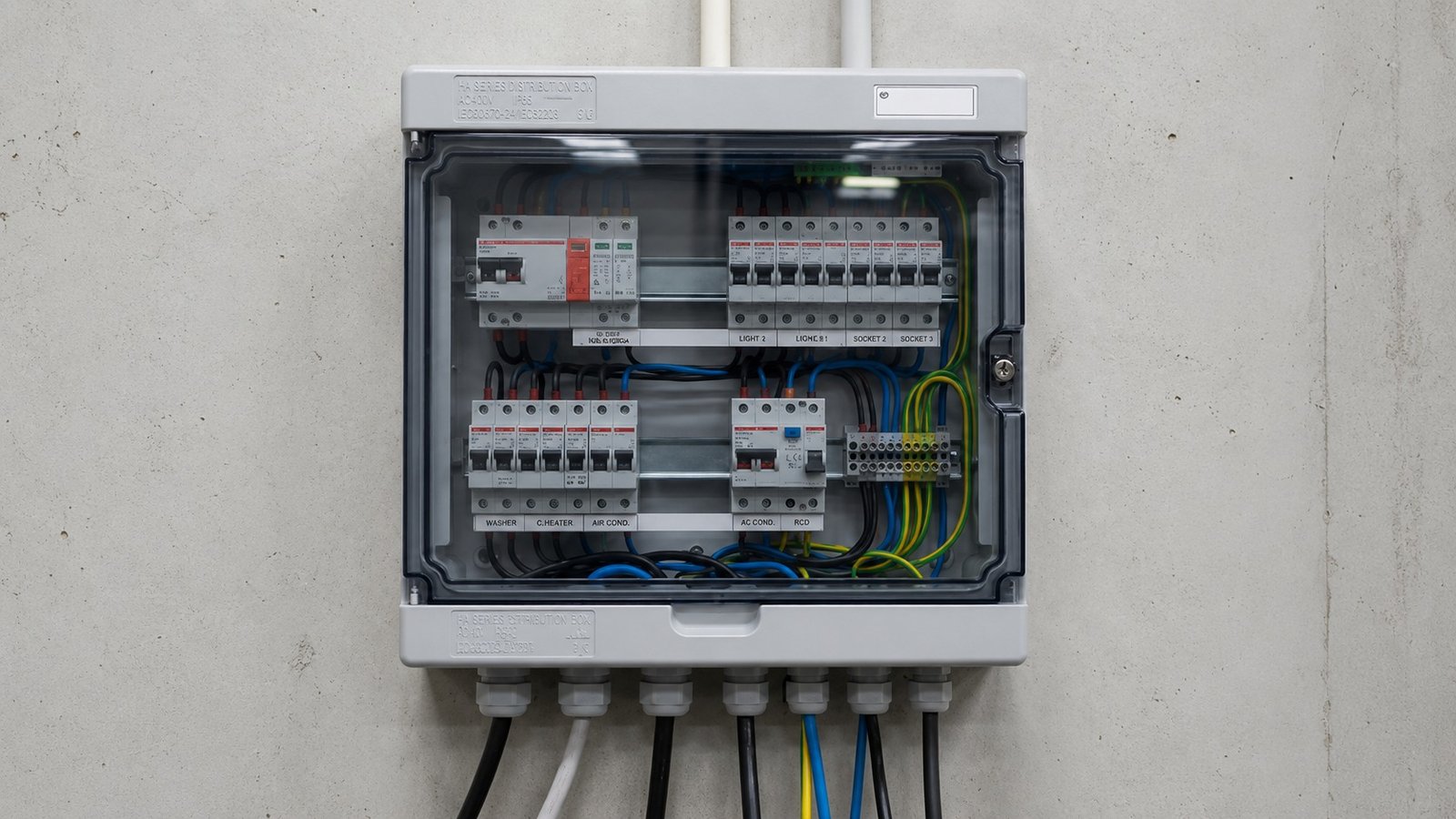
The enclosure is the outer housing. Inside, DIN rails sit in horizontal rows. Devices mount along each rail. The enclosure may include a door, lock, backplate, cable openings, and neutral and earth terminals. What goes inside depends on your project.
Common devices include circuit breakers, residual-current devices, isolators, surge protectors, contactors, and terminal blocks.
Row Layout Versus General Distribution Box
“Distribution box” is a broad term that covers many box styles. A row-type box uses one specific layout: devices lined up along horizontal rails. This makes it easier to organize circuits, spot each device, and do maintenance without touching other equipment.
What does row type mean in a distribution box? It means the devices mount in horizontal rows on DIN rails inside the enclosure.
How to Choose the Right Number of Rows
Base your row count on the devices you need to fit, not just the number of circuits. Count each device and its width. Add the main switch, protection devices, and neutral and earth terminals. Then leave space for wiring, cable entry, and future growth.
The simplest method works best. Count the DIN modules you need. Check that number against the usable rail length on the drawing.
Five steps for choosing enclosure row capacity:
- List every device you need, including the main switch and surge protection.
- Add up the module width of each device.
- Add spare modules for future circuits.
- Compare your total to the usable rail length of each row option.
- Check that cable routing and terminal space still fit.
Single-Row Distribution Box
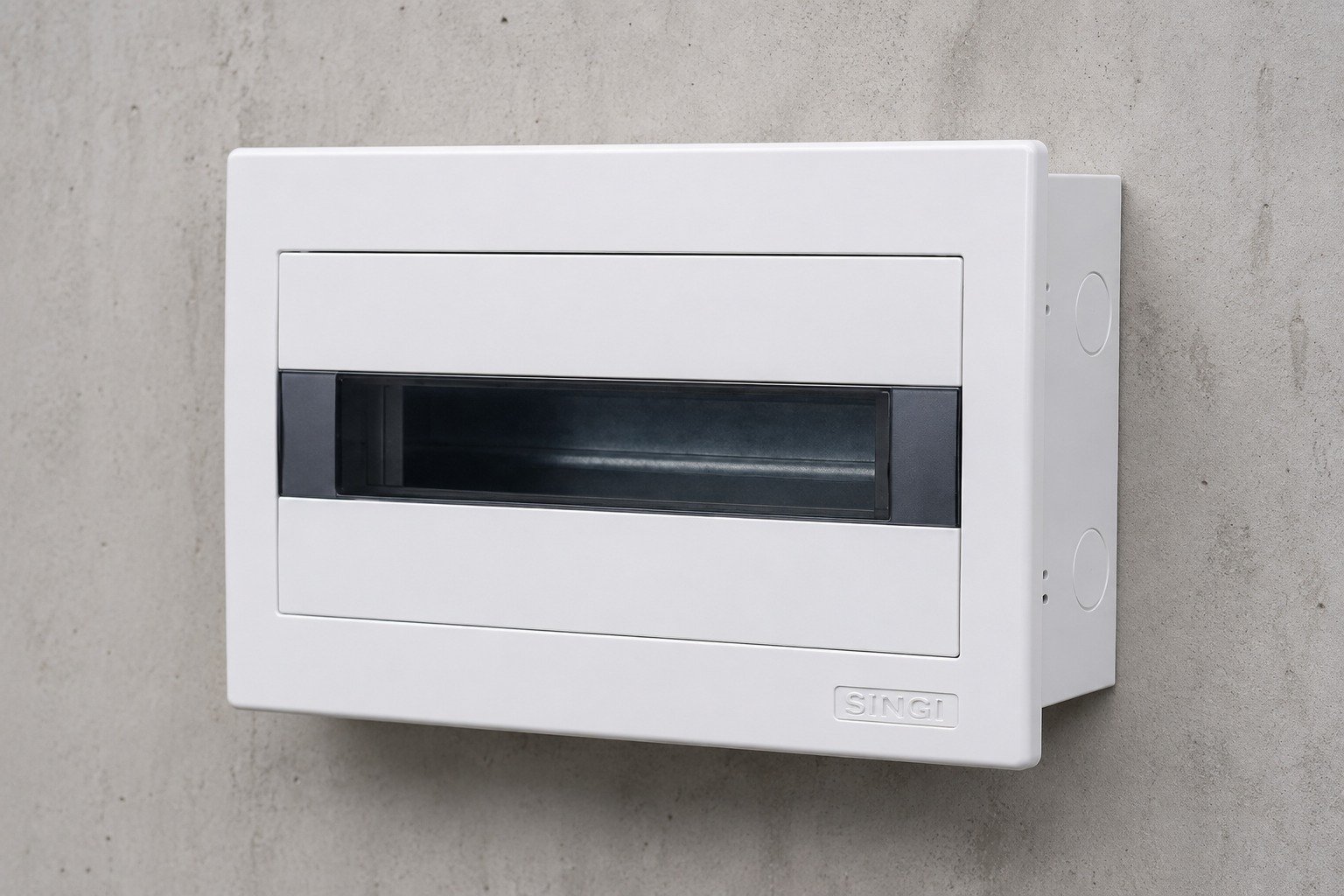
A single-row metal distribution box is suitable for small jobs with few devices. It suits small homes, compact equipment panels, auxiliary circuits, small commercial spaces, and tight retrofits.
It has some limits too. There is less space for cables, expansion is harder, separating incoming outgoing devices takes more planning, and wide devices may not fit.
Multi-Row Distribution Box
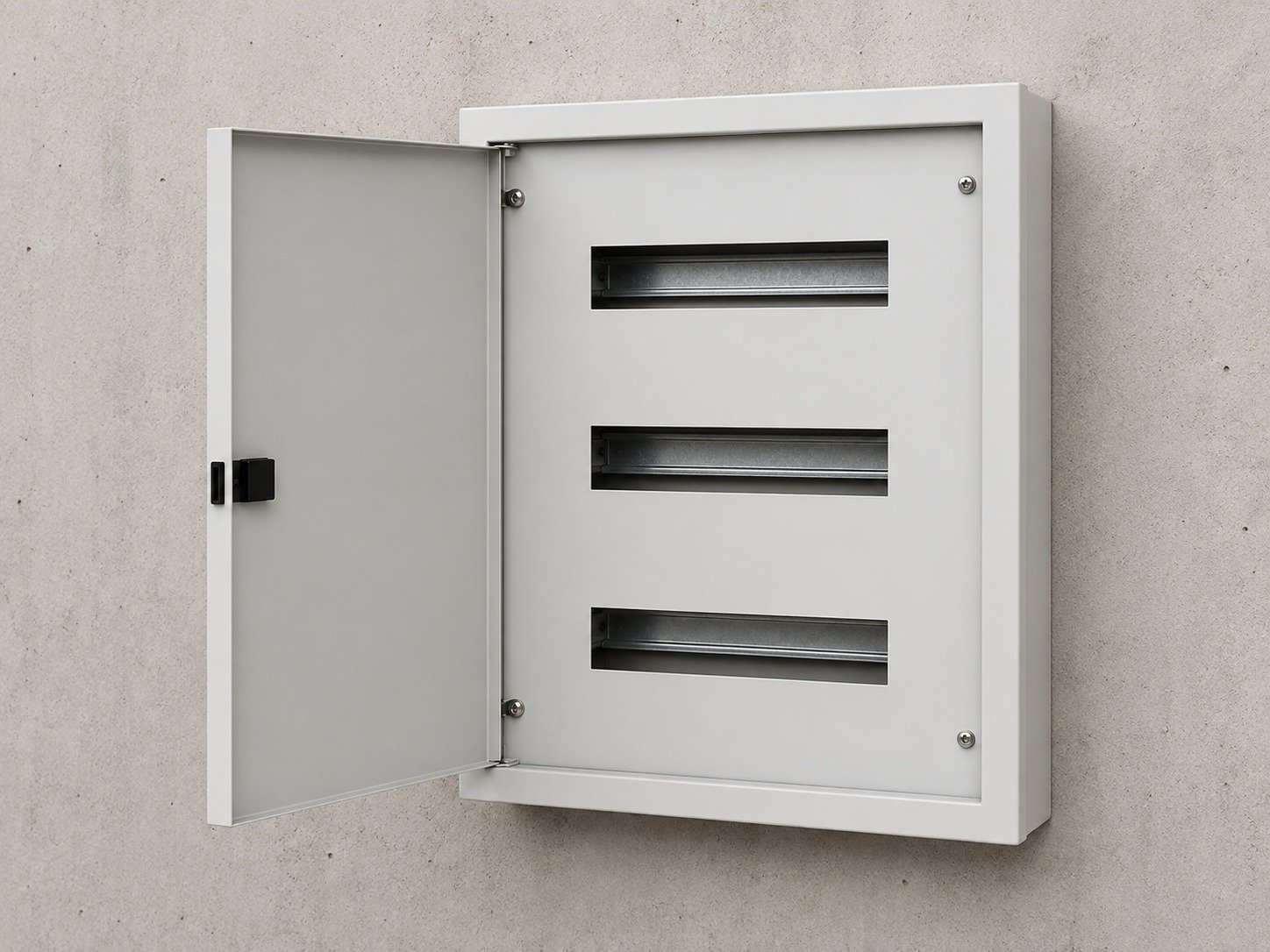
Multi-row enclosures suit bigger jobs. They work well for commercial and industrial sites, projects that need separate device groups, larger incoming equipment, and future expansion.
More rows means more physical space, not a higher power rating. The load rating comes from the breakers, busbars, and wiring inside the box, not the row count.
Single-Phase Distribution Board Applications
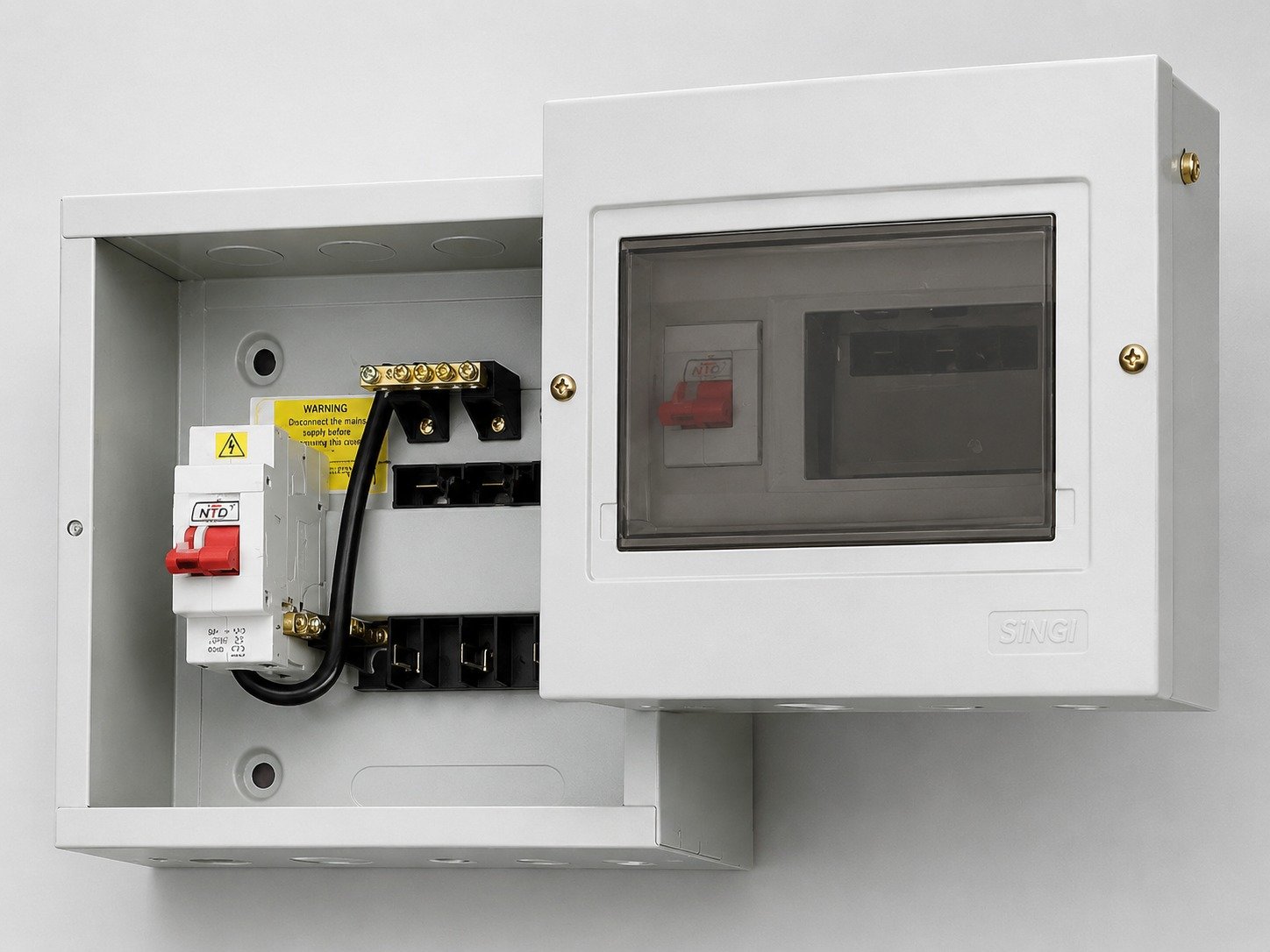
A single-phase distribution board takes power from a single-phase supply. It sends that power to several protected circuits. A row-type enclosure works for this when its layout fits the equipment.
Before you pick an enclosure, check the main isolator, breaker layout, and neutral and earth terminals. Check device width, busbar setup, cable entry point, and the current and voltage ratings you need. Leave room for extra protection devices too.
Typical Single-Phase Applications
You’ll find single-phase boards in homes, small offices, shops, workshops, and small HVAC or pump setups. Not every row-type box fits every job. It depends on the devices and ratings you need.
What is a single-phase distribution board used for? It is used to send power from a single-phase supply to several protected circuits in homes, small offices, and similar sites.
Flush Mount or Surface Mount?
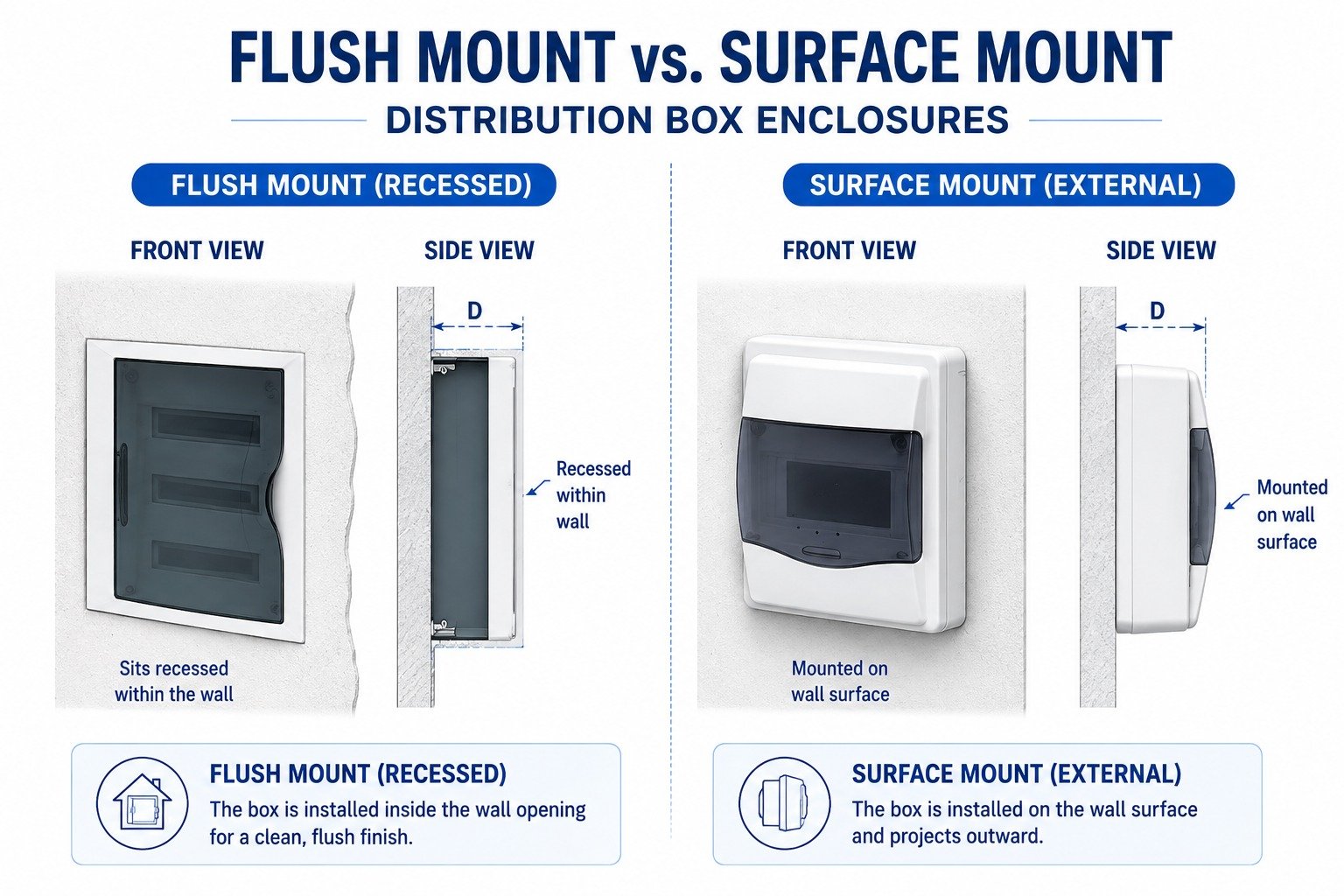
Mounting style affects how the box looks, how hard it is to install, and how easy it is to reach for service. The right choice depends on your wall and your project.
Flush-Mount Distribution Box Enclosure
A flush-mount box sits recessed inside the wall. This gives a cleaner look and takes up less floor space. You need an accurate wall opening for it to fit. Check the enclosure depth against the wall cavity before you cut. Plan your conduit and cable bends early, since this type is harder to retrofit once the wall is finished.
Surface-Mount Distribution Box Enclosure
A surface-mount box fixes right onto the wall. It’s easier to install, and cables are easier to reach. It works well for retrofits, where cutting into a wall isn’t practical. The trade-off: it sticks out more. You’ll see this type often in utility rooms, plants, and industrial spaces.
Consideration | Flush mount | Surface mount |
Installation | Requires wall preparation | Faster and simpler |
Appearance | Recessed | Visible projection |
Retrofit suitability | More difficult | Usually easier |
Cable access | Must be planned early | Generally more accessible |
Neither option wins every time. Pick based on your wall type, desired look, service access, and cable space.
Why Choose a Metal Distribution Box Enclosure?
Metal is strong. It resists impact well and holds heavier devices in place, which is why plants and factories often choose it. Metal also allows for more custom work, such as powder coating, stainless finishes, and cut holes for mounts and glands.
A single-row metal distribution box works well for small jobs that still need that strength. But metal isn’t right for every project. Your choice depends on corrosion risk, weight limits, insulation needs, and the site itself.
Common Material Options
Powder-coated steel works for most jobs. Stainless steel holds up better in saltwater or around chemicals. ABS or polycarbonate gives you a lighter, insulated option when metal isn’t needed.
Coating quality, gaskets, and fasteners matter as much as the base material. Ask your supplier about these details rather than judging by material name alone.
Distribution Box Enclosure Specification Checklist
Width and height alone don’t tell you if a box will fit. Check these details too.
Dimensions and Internal Space
Confirm the external width, height, and depth. Check the usable rail length, device clearance, and cable bend radius. Check backplate clearance, door swing, and room for glands, conduits, and future devices.
Rows, Modules and Device Compatibility
Check the row count and modules per row. Confirm device width, rail type, and main switch size. Check how protection devices are arranged, and whether the box ships empty or pre-filled.
Mounting, Door and Cable Entry
Choose flush or surface mount, and pick a hinge side for the door. Decide on a lock, handle, or viewing window. Confirm the backplate, knockout or gland-plate spot, conduit direction, and cable-entry size.
Environmental Protection and Documentation
Check the IP or NEMA rating, if applicable. Confirm material thickness, finish, and corrosion protection. Ask for gasket details, drawings, device compatibility info, and any test or certification paperwork.
An empty enclosure’s rating isn’t the same as the finished assembly’s rating. Confirm compliance once the full assembly is built.
Customization Options for a Row Type Distribution Box
Custom builds often change the width, height, and depth. They can also change the number and position of DIN rails, the backplate, cable glands, and knockout patterns. Other common changes: door and lock style, powder-coat color, stainless steel, mounting holes, labels, and private branding.
Information Needed for a Technical Quote
An accurate quote depends on a few core details:
- External dimensions and enclosure depth
- Row count and estimated module count
- Device layout and mounting style
- Material, finish, and environmental conditions
- Cable-entry requirements
- Quantity and delivery timeline
Need non-standard dimensions, a custom rail layout, or specific cable entry points? We build the enclosure around your layout, not the other way around.
Ready to specify your enclosure? Request a quote for a custom row type distribution box.
Final Selection Checklist
- Confirm the row count
- Calculate module capacity
- Allow spare space
- Select flush mount or surface mount
- Confirm depth and cable space
- Select material and finish
- Define cable entry
- Verify ratings and documentation
- Confirm whether the project needs an empty enclosure or a complete assembly
For project-specific sizing, request technical drawings or a detailed specification before you order.
Frequently Asked Questions
What is a row-type distribution box enclosure?
A row-type DB enclosure is a housing that houses protection and switching devices in horizontal rows on DIN rails. It gives you structure for wiring and maintenance.
What is a single row metal distribution box used for?
It fits small homes, small commercial jobs, and equipment panels. It also works well for retrofits with few devices and limited space.
What is the difference between flush mount and surface mount?
Flush mount sits inside the wall for a cleaner look. Surface-mount attaches to the wall, making it easier to install and access.
Can a row type enclosure be used for a single-phase distribution board?
Yes, as long as the dimensions, rail layout, terminals, and devices match your single-phase equipment.
How many rows should a distribution box enclosure have?
There’s no fixed number. Count the devices you need, add spares for future circuits, then match that total to the usable rail length of each option.