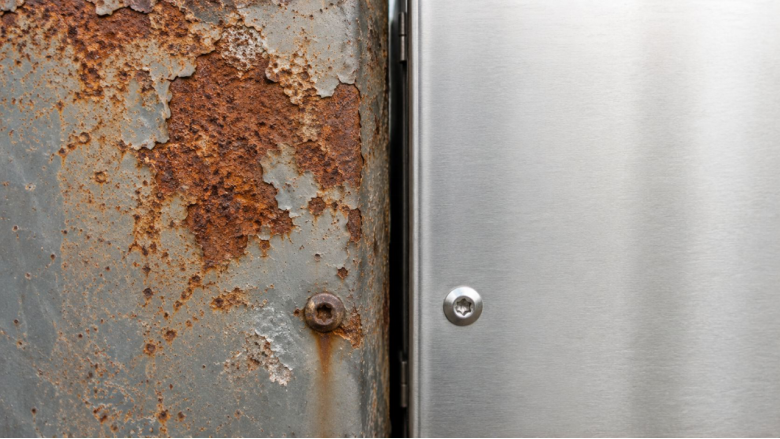
Stainless steel enclosures protect equipment in places where moisture, salt, or frequent washdowns would rust a plain steel box within a few years. They resist rust, stay clean, and last a long time, which is why they are commonly used in food plants, coastal facilities, and busy industrial sites.
304 and 316 grades cover most of these conditions. The right one depends on how much salt is in the air or water, how often the enclosure gets washed down, and what chemicals are used to clean it. A dry indoor panel room needs very little protection, but a plant near the ocean needs a lot more.
This guide breaks down both grades in plain terms, so you can match the right one to your site instead of guessing based on “indoor versus outdoor.”
Pros and Cons of Stainless Steel Enclosures
Before picking a grade, it helps to know what stainless steel brings to the table, and where it falls short.
Pros:
● Resists rust and corrosion far better than painted carbon steel
● Handles washdown, moisture, and chemical exposure without breaking down
● Stays easy to clean and sanitize, which matters in food and pharma plants
● Holds up for decades with very little maintenance
● Works well as a wall-mount stainless steel enclosure, protecting panels close to the equipment without taking up floor space
Cons:
● Costs more upfront than carbon steel or painted enclosures
● 316 carries an even higher price, since it contains added molybdenum
● Can be more protection than needed for dry, low-risk indoor spaces
● Weighs more than composite or fiberglass options, which can matter for wall-mounted installs
For most sites with any real exposure to moisture, salt, or washdown, the pros outweigh the higher cost. The next section breaks down exactly when to reach for 304 versus 316.
How to Choose Stainless Steel Enclosure: 304 or 316?
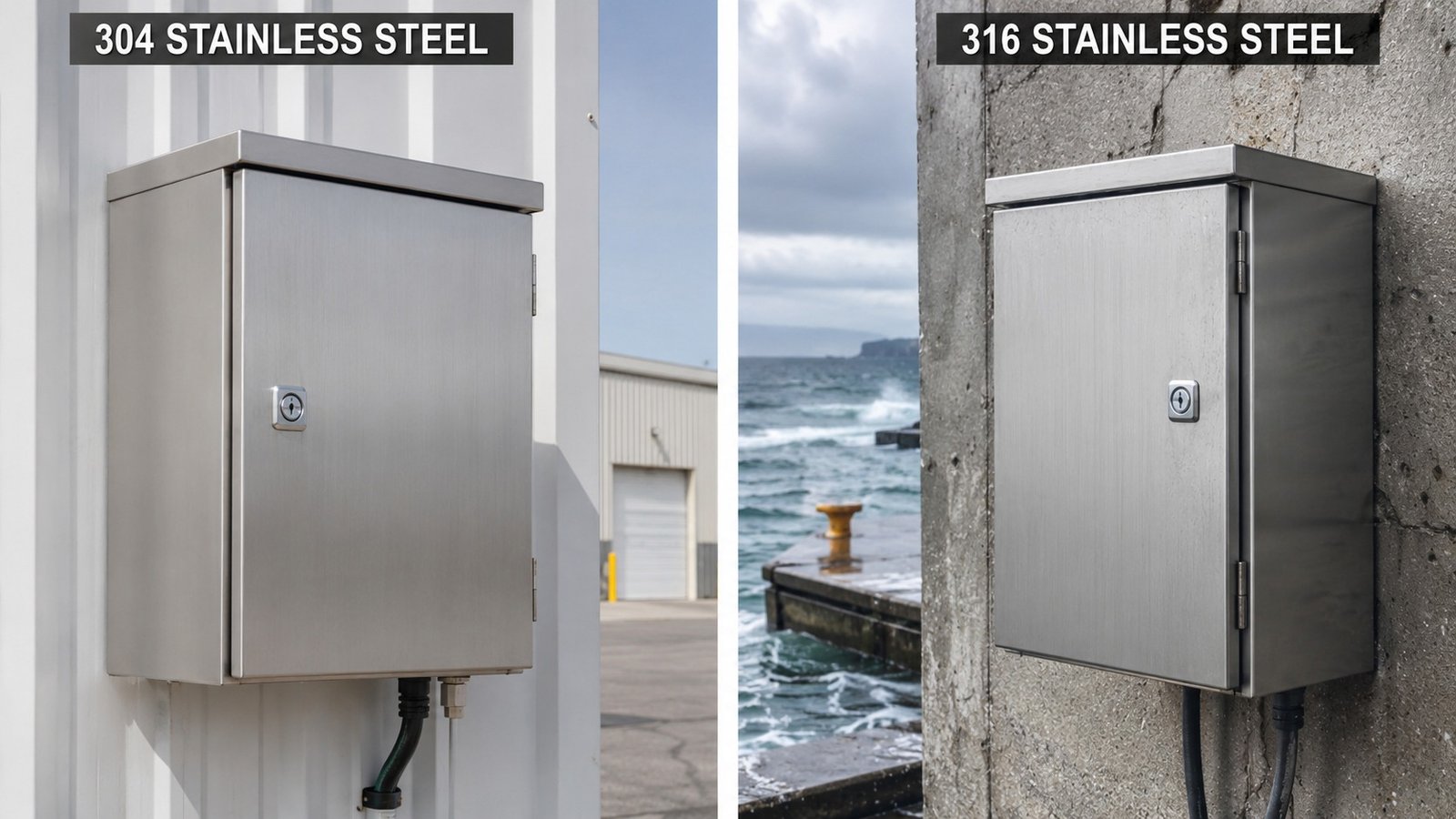
That single difference is why 316 costs more, and why it holds up in places where 304 would eventually pit or rust. The right grade depends on how much salt your equipment sees, how warm and damp the air stays, and whether the enclosure sits in a tight spot where salt can build up.
Chloride Thresholds: Where 304 Stops and 316 Starts
Chloride is the part of salt that can corrode metal. It’s measured in parts per million (ppm). The higher the ppm, the greater the corrosion risk.
304 holds up well below about 100 to 200 ppm of chloride in normal water. Past that point, especially in warm or still water, small pits start to form on the surface.
316 handles far more. Most sources put its safe limit near 1,000 ppm at room temperature, and some tests show it lasting even longer in cooler water, as chloride guidance for stainless alloys explains. Engineers usually design around the 1,000 ppm figure to stay on the safe side.
These numbers are starting points, not promises. Heat, tight crevices, and physical stress on the metal all lower the real-world limit. Even 316 can crack under high heat and high chloride, a failure called stress corrosion cracking, and that’s when a stronger alloy like duplex steel is worth considering, as research on chloride-driven cracking shows.
Example Environments and Recommended Grades
Here’s how those numbers play out on real job sites.
|
Environment |
Recommended Grade |
|
Dry indoor panel rooms, general industrial spaces |
304 |
|
Food and beverage plants with routine washdown |
304 in light areas, 316 where sanitizers or daily washdown are used |
|
Coastal or marine sites |
316, since 304 tends to pit and rust over time |
|
Chemical plants and wastewater sites |
316 as a minimum |
|
Roadside enclosures near winter de-icing salt |
316 |
Simple Decision Tree for 304 vs 316 Enclosures
Ensure that you go through these four questions before choosing a grade.
1. Is the site dry and indoors? If yes, 304 is usually enough.
2. Does it face frequent washdown or harsh cleaners? If yes, lean toward 316.
3. Is it coastal or near salted roads? If yes, choose 316.
4. Is chloride above 200 ppm, or does the site run hot? If yes, 316 is the safer pick.
If none of these apply, 304 will likely work. For critical panels or hard-to-reach spots, 316 is worth the extra upfront cost.
Lifecycle Cost and Long-Term Value of Stainless Steel Enclosures
Stainless steel costs more than painted carbon steel. That price alone doesn’t tell the full story, since it leaves out repainting, repairs, and downtime caused by rust.
Upfront Cost vs 25-Year Total Cost of Ownership
Over 25 years, stainless often ends up cheaper than painted carbon steel, even with a higher starting price. It needs less repainting, fewer replacements, and causes less downtime, according to lifecycle cost analysis of industrial equipment.
316 costs more than 304 at the start, but in tough conditions it can outlast 304 by years, avoiding a mid-life swap. Here’s the trade-off in short form:
● Carbon steel: cheapest to buy, needs repainting, often replaced within 10 to 15 years in harsh spots.
● 304 stainless: moderate cost, low upkeep in mild settings, may need early replacement where salt is high.
● 316 stainless: highest cost, very low upkeep, longest life in tough environments.
Downtime and Risk: When a Cheaper Enclosure Costs More
A corroded enclosure lets in water or dust, and that can shut down the control system inside. In food and pharma plants, corrosion can also cause a failed audit or a halted production line.
Paying more for 316 makes sense for critical panels, hard-to-reach mounts, and any site where one failure could hurt safety or product quality. For low-risk, easy-to-reach equipment, 304 or even carbon steel can still be the right call.
Practical Takeaways for Specifying 304/316 Stainless Steel Wallmount Enclosures
Base your choice on chloride levels, environment, and washdown habits, and treat published ppm limits as guidelines rather than hard rules. Weigh the full lifetime cost against the purchase price, and lean toward 316 for coastal, high-washdown, or critical installations.
If you’re specifying enclosures for a coastal site, a washdown area, or a critical panel, our team can help you match the right grade to your site. Request a quote today and get a recommendation built around your conditions.
Frequently Asked Questions
What is the difference between 304 and 316 stainless steel enclosures?
A 304 stainless steel enclosure resists rust well in dry or low-chloride settings. A 316 enclosure adds molybdenum, giving it much stronger resistance to salt and chemicals in coastal or washdown environments.
Do stainless steel enclosures need to be 316 for outdoor use?
Not every outdoor site needs 316. A dry outdoor spot with low salt exposure can often use 304, while a coastal or roadside site with regular salt exposure calls for 316.
How much chloride can a 316 stainless steel enclosure withstand?
A 316 stainless steel enclosure typically handles chloride levels up to around 1,000 ppm at room temperature. Heat, still water, and tight crevices can lower that limit in real conditions.
Is a 316 stainless steel enclosure worth the extra cost?
A 316 stainless steel enclosure is worth the extra cost in coastal, chemical, or high-washdown settings, where its longer life and lower upkeep offset the higher purchase price over time.