
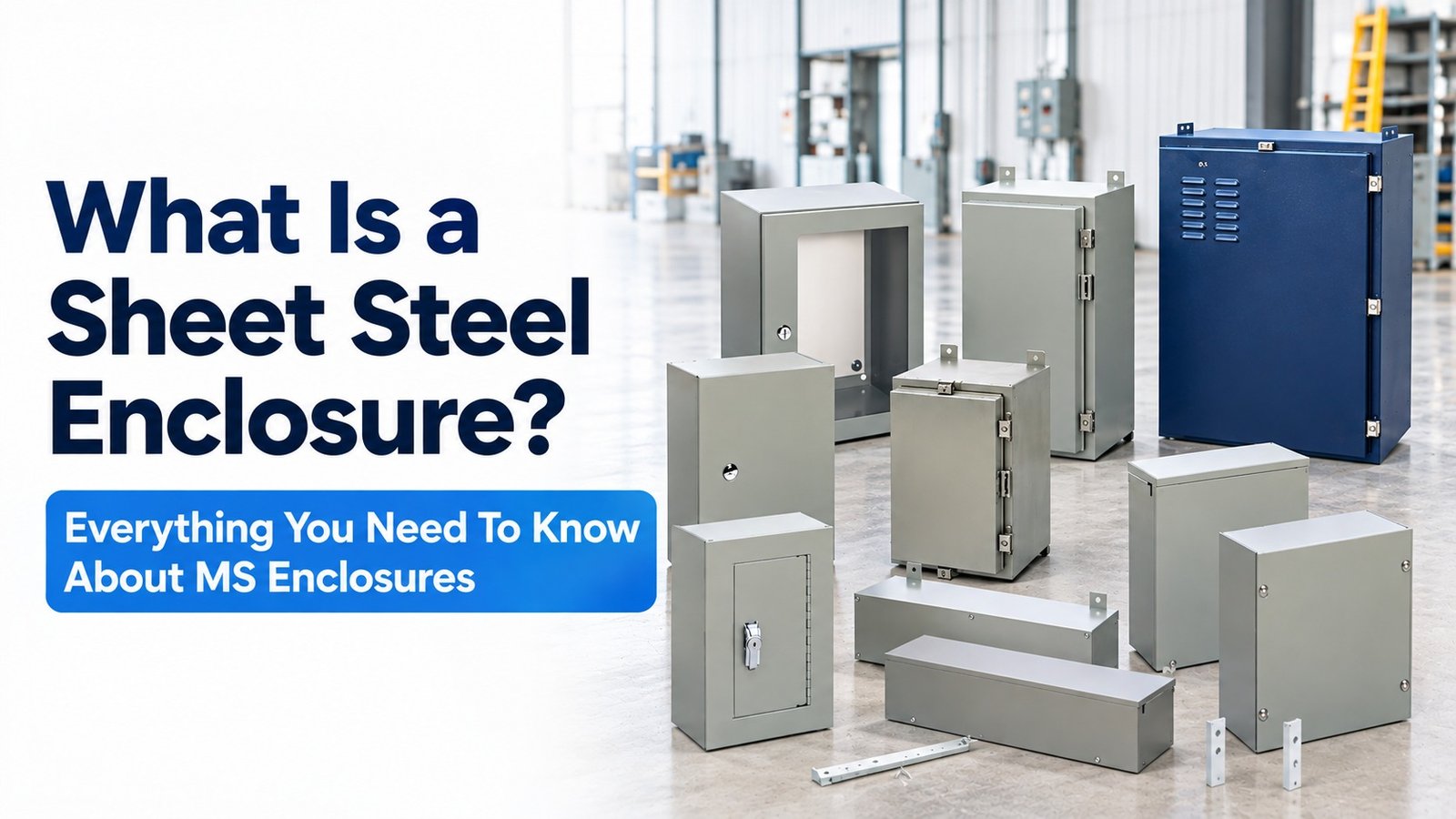
A sheet steel enclosure is a protective box made from formed steel sheets. It houses and protects electrical, electronic, or industrial equipment. People also call it an MS enclosure, a steel electrical enclosure, or a steel enclosure cabinet. It can include mounting panels, cable entry points, vents, sealed edges, and a lockable door for controlled access. This guide covers what these enclosures are made of, where they’re used, and which features matter most when you choose one.
What Is a Sheet Steel Enclosure Made Of?
A sheet steel enclosure starts as flat steel panels. Workers bend and join these panels into a box. The box has seams, a door or cover, and mounting points inside. The word “sheet” means the steel comes as a thin, flat sheet. It is not a solid cast block.
A basic sheet steel enclosure usually includes:
- Formed steel panels bent into a box shape.
- A hinged door or a removable cover for access.
- A mounting plate or brackets to hold equipment inside.
- Cable entry points for wiring.
- Flanges and seams that hold the box together.
One common version is the MS enclosure, where MS stands for mild steel. Mild steel is a low-cost, strong metal. It works well in general industrial settings, both indoors and in mild outdoor spots. Plain mild steel can rust over time. That is why it usually needs a coating, such as paint, powder coating, or galvanizing, to fight rust.
A sheet steel enclosure is different from a plastic or aluminum enclosure. It also differs from a stainless steel enclosure or a large structural cabinet. Each type suits a different job. The right choice depends on the equipment inside, the surrounding space, how much protection it needs, and how often people open it.
What Does a Sheet Steel Enclosure Protect?
As an electrical equipment enclosure, it does several jobs at once for the gear inside:
- Physical protection:It shields parts from bumps, scrapes, and accidental contact.
- Electrical safety:It keeps people away from live parts they should not touch.
- Environmental protection:When built and sealed well, it can block dust, water, and oil based on its rated protection level.
- Equipment organization:It gives breakers, terminals, relays, PLCs, drives, and wiring one tidy space.
- Security:A lockable door limits access to people with a key or code.
- Interference shielding:Steel can help block electrical interference. This depends more on the seams, grounding, and cable entries than on the metal alone.
- Wiring containment:It keeps cables organized and out of the way.
A steel enclosure is not automatically waterproof, dustproof, or fully safe on its own. Its real performance depends on how it was built, how well it was sealed and installed, and which NEMA or IP rating it carries.
Where Are Steel Electrical Enclosures Used?
Industrial steel enclosures show up across many fields. So much equipment needs a safe, organized home. Each setting asks the enclosure to do a slightly different job.
Application | What the Enclosure Needs to Do |
Industrial automation and PLC systems | Organize controls and support safe wiring |
Electrical distribution panels | House breakers and terminals with easy service access |
Machinery and OEM equipment | Include cutouts, cable routing, and vibration-resistant hardware |
Motor controls and power systems | Protect wiring and parts from heat and movement |
Building and utility services | Provide a secure, weather-ready housing |
Telecommunications equipment | Keep sensitive electronics safe and organized |
Outdoor equipment | Use weather-resistant material, sealing, and a suitable rating |
Outdoors, a steel enclosure can still work well. It just needs the right material, coating, sealing, and rating for the local weather.
What Materials and Finishes Are Used?
Enclosure material affects strength, cost, and long-term rust resistance.
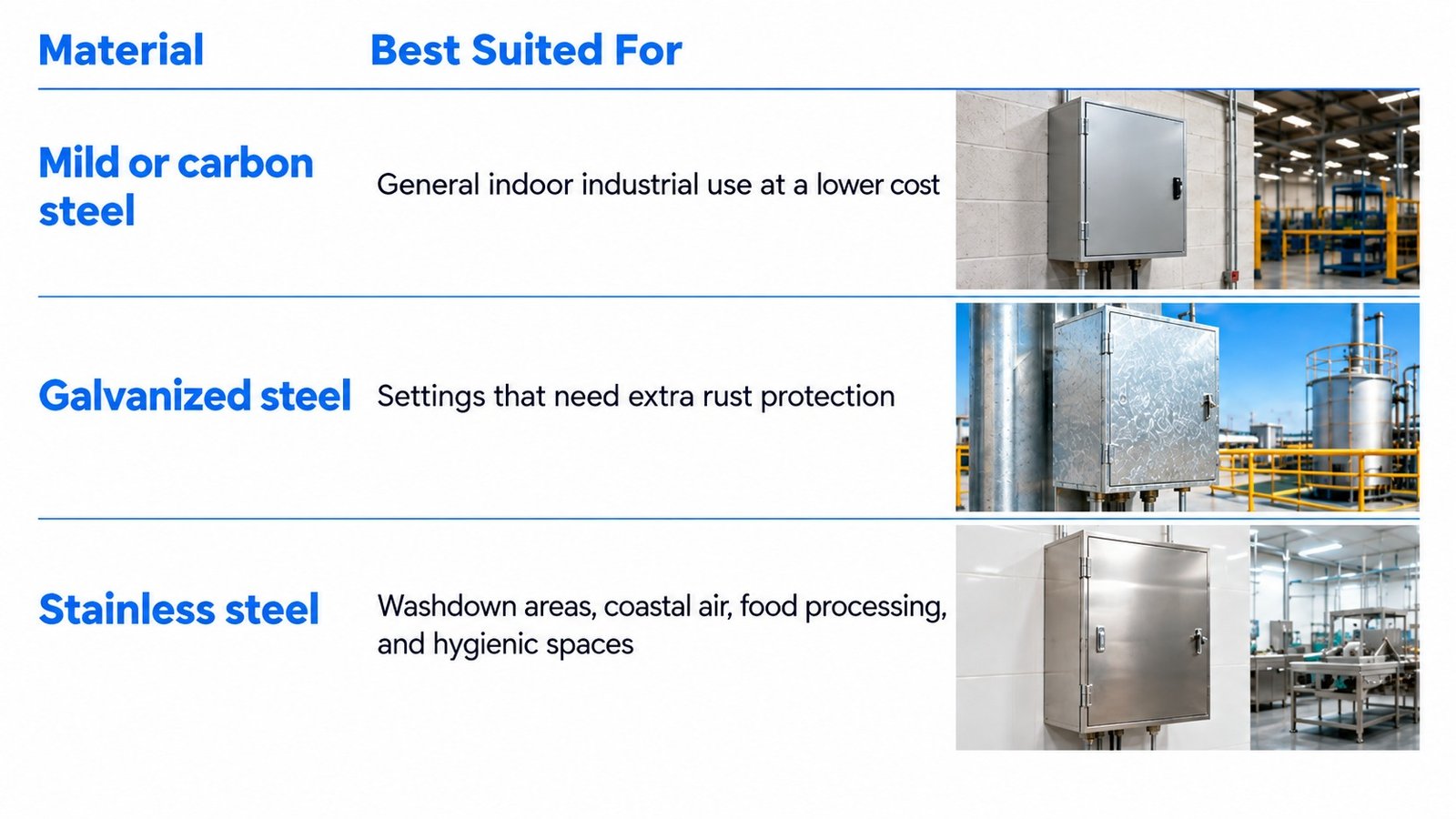
The finish on top of the base metal matters just as much as the metal itself:
- Powder coating adds a tough, protective layer with a clean look.
- Wet paint gives a similar protective layer through a different method.
- Galvanizing protects steel with a zinc coating baked onto the surface.
- Brushed or passivated stainless steel adds extra resistance in demanding spots.
- Bare steel can work in tightly controlled indoor spaces without added coating.
Pick the material and finish based on the real environment. Think about humidity, chemicals, sunlight, and cleaning routines. Do not decide based only on whether the enclosure sits indoors or outdoors.
Sheet Steel Enclosure Features to Consider
The right features make an enclosure easier to install, use, and maintain:
- Internal size with room for equipment and wiring.
- A mounting plate and DIN-rail compatibility for fastening parts.
- Cable glands, knockouts, and conduit entries for clean, sealed wiring.
- A hinged or removable door for service access.
- An enclosure with a lockable door to limit access and reduce tampering.
- Quarter-turn locks, key latches, or padlockable handles for different security levels.
- Gaskets and compression seals to keep out dust and moisture.
- Fans, filters, or vents to manage heat buildup.
- Grounding and bonding points for electrical safety.
- Wall, floor, or panel mounting with room to inspect and repair it later.
What These Features Look Like on a Real Enclosure
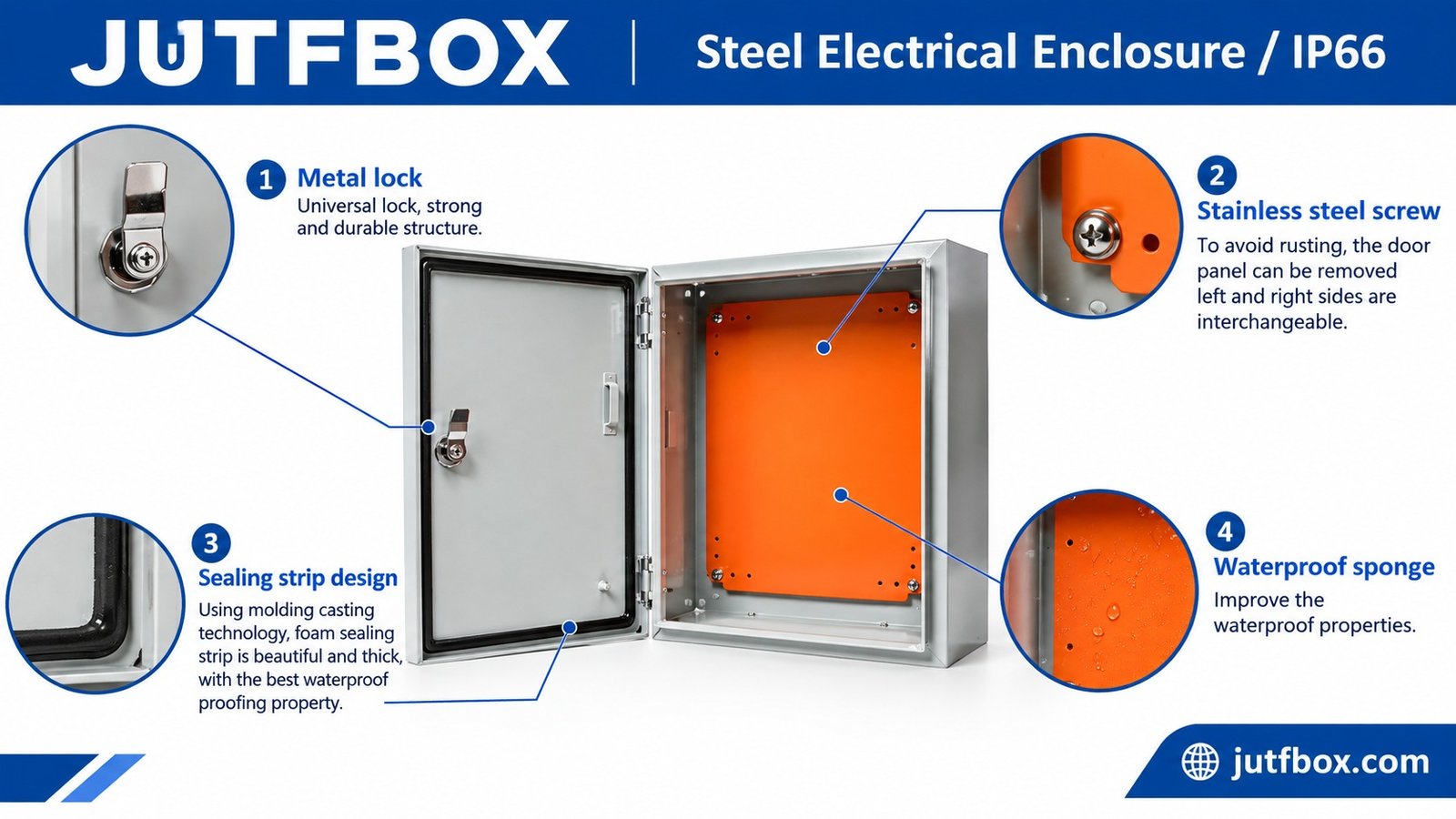
A lockable door, corrosion-resistant hardware, and a sealed gasket all work together to keep the enclosure secure and weather-ready. The example below shows how these parts fit into an IP66-rated steel enclosure.
How to Choose the Right Sheet Steel Enclosure
Use this checklist to guide your decision:
- List the equipment that will go inside and measure its size.
- Leave room for wiring, heat, future upgrades, and hands-on maintenance.
- Define the environment: indoor, outdoor, wet, dusty, corrosive, or hazardous.
- Choose a material and a protective finish that match that environment.
- Confirm the NEMA or IP rating the job needs.
- Pick the door style, lock type, mounting method, cable entries, and ventilation.
- Check grounding, approvals, and local installation rules.
- Confirm the finished enclosure fits and supports the parts you plan to install.
If a standard size does not fit your gear, a custom sheet steel enclosure can be built to match your exact dimensions and cutouts.
Whether you need a NEMA steel enclosure or an IP-rated steel enclosure, check the rating carefully. NEMA and IP ratings sound alike, but they cover different ground. The National Electrical Manufacturers Association publishes the official standard behind both systems:
Rating System | What It Mainly Covers |
IP (Ingress Protection) | Protection against solid objects and water |
NEMA | Protection plus features like rust resistance and icing |
Get the Right Enclosure for Your Equipment
Choosing the right sheet steel enclosure means matching the material, finish, size, and rating to your equipment and its environment. Once you know these details, the rest of the decision gets much easier.
Have a project in mind? Contact our team for a quote on a sheet steel enclosure built around your exact requirements.
Sheet Steel Enclosure FAQ
1. What is an MS enclosure?
An MS enclosure is a mild-steel enclosure. It houses and protects electrical, electronic, or industrial gear.
2. Is a sheet steel enclosure suitable for outdoor use?
A sheet steel enclosure can work outdoors. It needs the right material or coating, proper sealing, drainage, UV resistance, and a suitable NEMA or IP rating.
3. Why choose an enclosure with a lockable door?
A lockable-door enclosure limits unauthorized access. It protects internal controls from tampering while still letting trained staff perform maintenance.
4. What is the difference between a sheet steel and stainless steel enclosure?
A sheet steel enclosure, usually made from mild or carbon steel, is picked for strength and lower cost. A stainless steel enclosure holds up better in corrosive, washdown, or hygienic settings.
5. What is the difference between NEMA and IP ratings?
NEMA and IP ratings both describe how well an enclosure protects its contents. IP ratings focus on solids and water. NEMA ratings can also cover rust resistance, icing, and other build rules.