Public EV charging still runs into trouble more often than most drivers expect. A 2025 industry report tracking over 100,000 charging sessions found that nearly one in three attempts still fail, and success rates drop from 85% on new stations to below 70% within three years. Industry analysis points to weather exposure, dust, and heat as major causes of this decline, which is why a properly sealed enclosure matters as much as the charger itself.
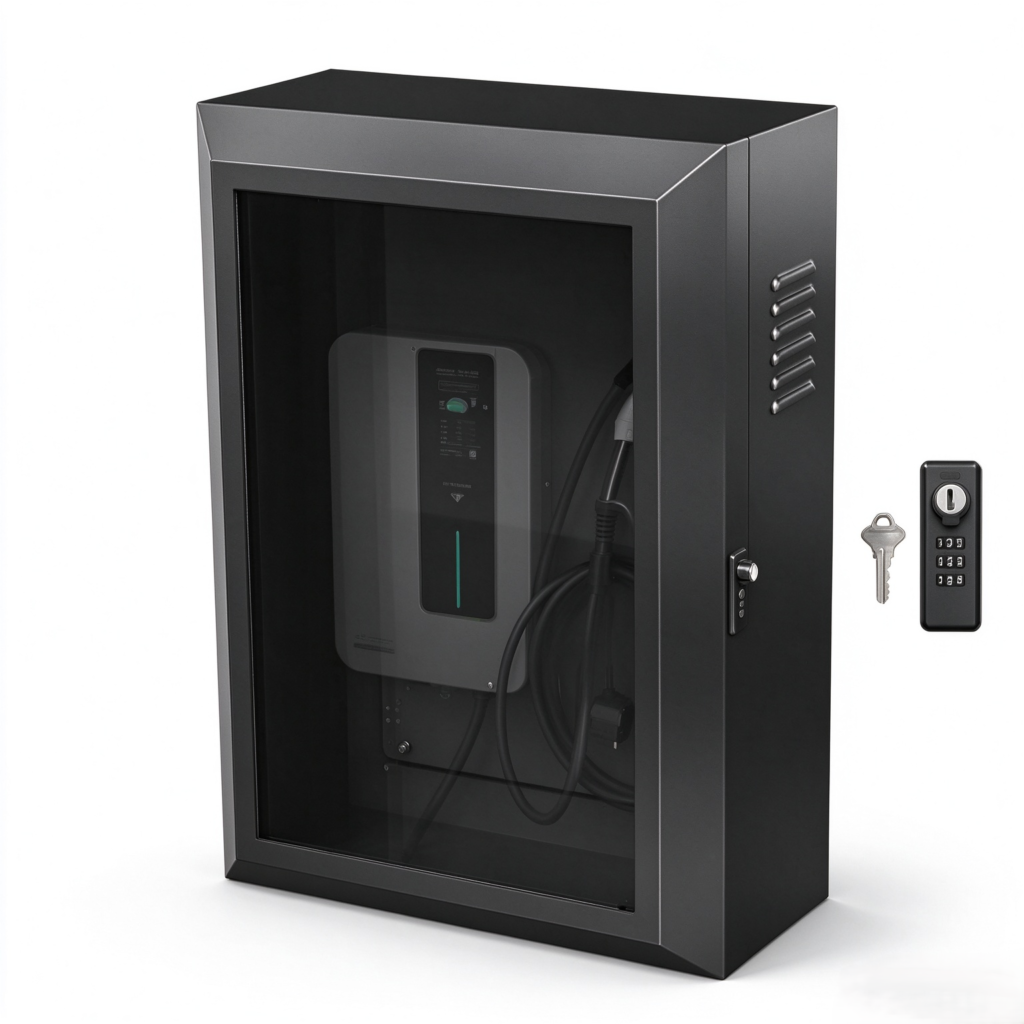
An outdoor EV charger enclosure is a steel housing designed to keep rain, dust, theft, and extreme temperatures out of the charging equipment inside.
This guide covers where these enclosures are used, from private driveways to public stations, and explains which materials and features suit each one. It also covers the manufacturing checks that confirm quality before the factory ships.
What Is an Outdoor EV Charger Enclosure?
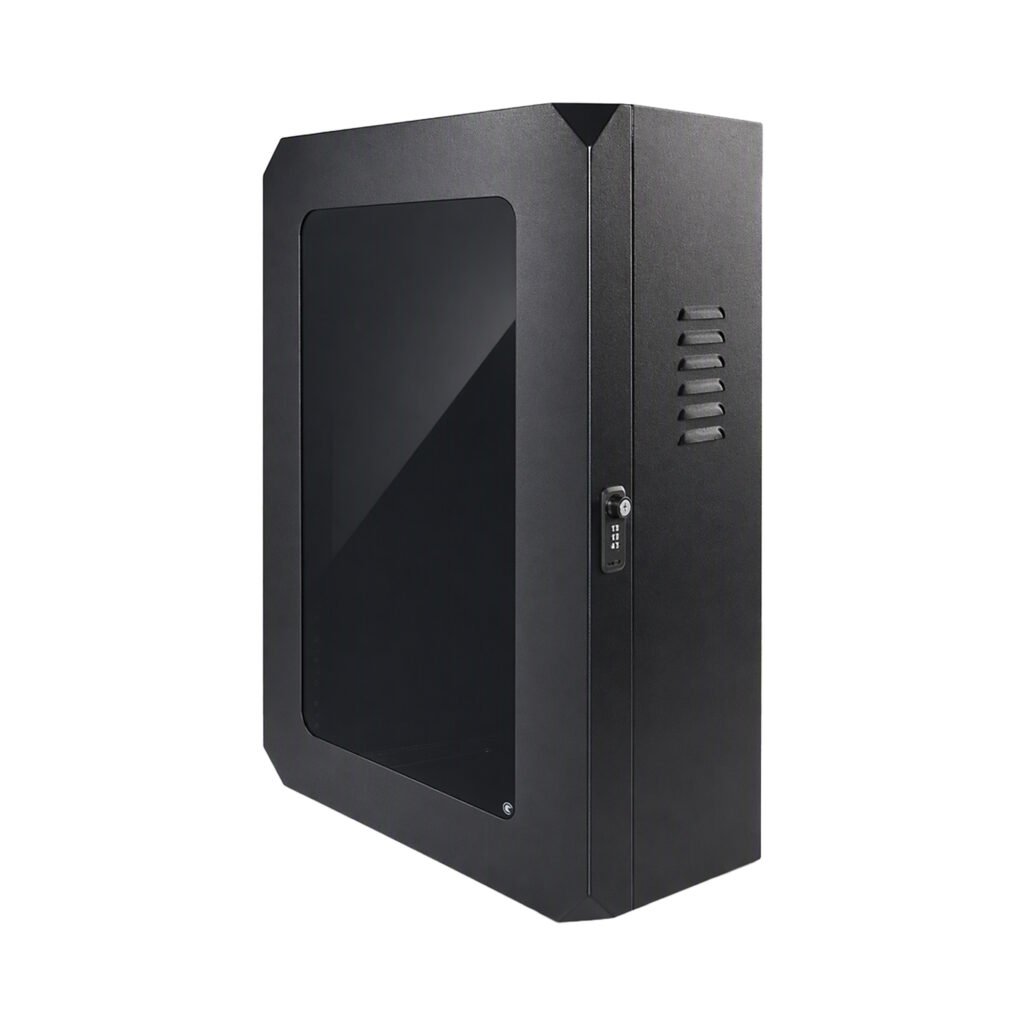
An outdoor EV charger enclosure is not the same as a basic cover sold for home use. It is built from industrial steel, sealed with a continuous gasket, and manufactured to tight tolerances so the door lines up correctly every time it opens and closes. Many factories also offer custom sizes, colors, and mounting patterns for buyers with specific requirements.
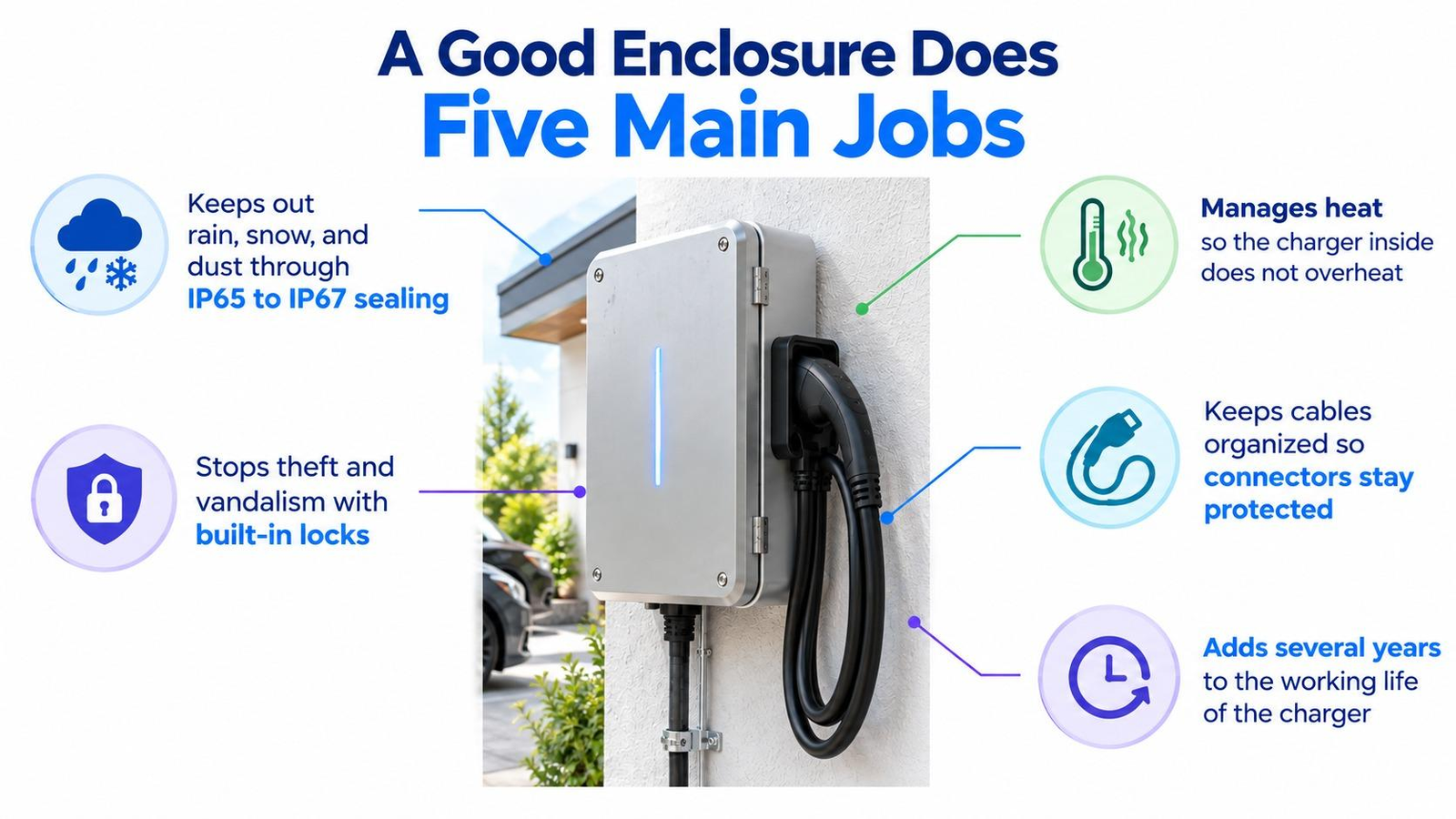
Different buyers need different things from an enclosure:
- OEM charger manufacturersusually need exact dimensions and branding to match their product line
- Importersneed enclosures that meet the rules of the country they are selling into, such as CE marking in Europe or UL standards in North America
- Installersoften want custom brackets or access panels for maintenance
- Home projects in sheltered spotscan usually use a standard, off-the-shelf box
Applications of Outdoor EV Charger Enclosures
Where a charger is installed determines what its enclosure must handle. A unit in a private garage faces very different risks than one beside a highway, so each section below matches a site to the threats, materials, and features it needs.
Residential Homes
Homeowners usually mount chargers on a garage wall or beside the driveway, where rain, sun, and passing cars can all cause damage. An enclosure shields the unit from the weather and from accidental bumps, and a lockable door keeps children and pets away from live parts. Powder-coated cold-rolled steel suits most home installs, and a light color helps in hot, sunny climates.
Apartment Complexes
Shared chargers in residential blocks sit in open parking areas and are used by many people each day. A key lock or electronic access keeps the unit safe from misuse and shields it from rain and dust between charging sessions. Powder-coated steel suits most sites, while stainless steel is better for buildings near the coast.
Public Charging Stations
Chargers at malls, highway stops, and public car parks take the heaviest use and the roughest handling. Enclosures protect them from tampering, impact, and weather, keeping downtime low as more drivers rely on public networks. Powder-coated steel works for inland sites, while 304 stainless steel or hot-dip galvanized steel suits utility-scale stations and locations near the sea.
Commercial Properties
Offices, hotels, and shopping centers add charging as a service for guests and staff. Enclosures give the charger a neat look, protect it from damage and theft, and keep walkways clear and safe in high-traffic areas. Custom RAL colors, logos, and sealed viewing windows for LED status lights let the unit match the property’s branding.
Fleet Depots
Delivery vans and company cars charge in all weather, often in large numbers at once. Enclosures keep these chargers running under heavy daily use and give staff a tidy, protected point to plug in. High-power chargers produce heat, so ventilation options such as top-mounted louvers or filtered vents matter here, along with internal rails for accessories.
Industrial Areas
Factories and warehouses place chargers near forklifts, machinery, and dusty work zones. A heavy enclosure shields the unit from flying debris, dust, and impacts, and hot-dip galvanized steel holds up well in rough settings such as mining operations. Double-lip gaskets add dust protection in high-dust environments.
Schools and Healthcare Facilities
Schools, colleges, and hospitals install chargers for staff, students, and visitors, often in busy areas where an out-of-service unit causes real inconvenience. Enclosures keep the charger available and safe around crowds. Lockable doors and smooth, ground welds suit these sites, where many people walk past the unit each day.
Government and Public Buildings
Civic buildings, transport hubs, and city car parks offer public charging and must meet local safety rules. Enclosures there face long hours of public use, so sturdy steel, tamper-resistant locks, and compliance marks such as CE or UL matter. A well-kept enclosure also keeps the public space looking tidy.
Choosing Materials for Each Site
Material choice follows the site’s climate and the service life you need. Ask your supplier for the exact coating thickness and a salt spray test report of at least 500 hours.
Material | Where it fits best |
Cold-rolled steel with powder coat | Homes, apartment complexes, and inland commercial sites. A 60-to-80-micron coating lasts five to eight years. |
Stainless steel 304 | Coastal areas and higher-end commercial sites. It resists rust without a coating that can chip and lasts ten to fifteen years with light cleaning. |
Stainless steel 316 | Sites within about 500 meters of the ocean, offshore platforms, and chemical plants. Added molybdenum gives it strong salt resistance and a fifteen-to-twenty-year life. |
Hot-dip galvanized steel | Mining operations, utility-scale stations, and heavy industrial sites. It lasts ten to twelve years and looks rougher than powder coating, so it suits industrial use better than customer-facing spots. |
EV Charger Enclosure Installation Tips by Climate
Tropical and monsoon regions:
- Mount at least 600mm above ground to avoid flood damage
- Use top-mounted louvers to release heat while keeping rain out
- Choose powder-coated steel or 304 stainless steels
Desert and high-dust areas:
- Use double-lip gaskets, which block dust more effectively
- Add filtered vents or internal fans to manage heat
- Pick light colors such as white or light grey, which can lower the internal temperature by 10 to 15°C
Cold climates:
- Use cold-flexible silicone gaskets, since standard EPDM becomes brittle below -20°C
- Fit a small internal heater to prevent condensation
Coastal and saltwater locations:
- Use 316 stainless steel or hot-dip galvanized steel, since powder-coated carbon steel corrodes within two to three years in salt air
- Fit stainless-steel hardware throughout
Manufacturing Features Worth Checking
A well-built enclosure has these non-negotiable features:
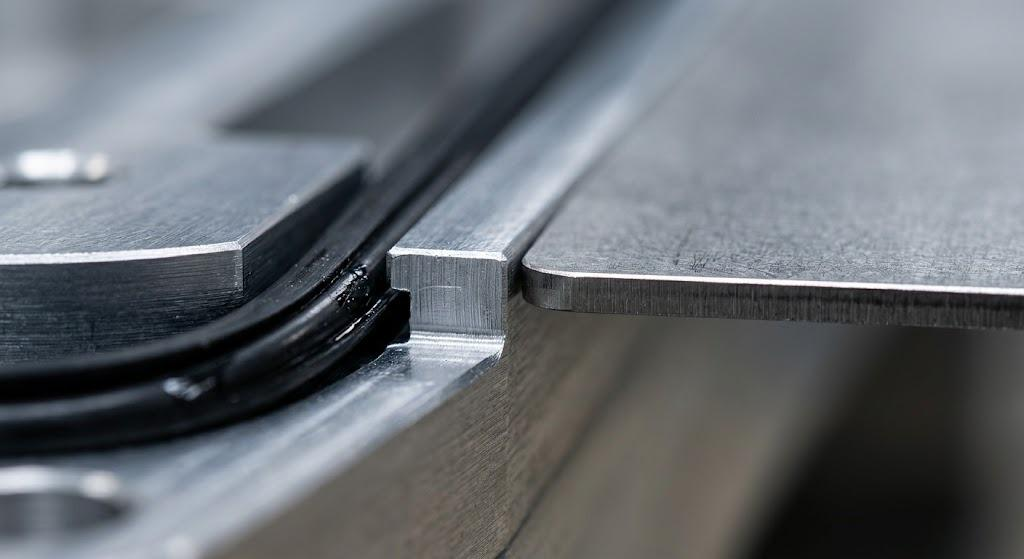
- A continuous gasket routed into the door frame, not silicone dabbed on by hand
- Laser-cut precision to about 0.1mm so the door seals evenly through thousands of open and close cycles
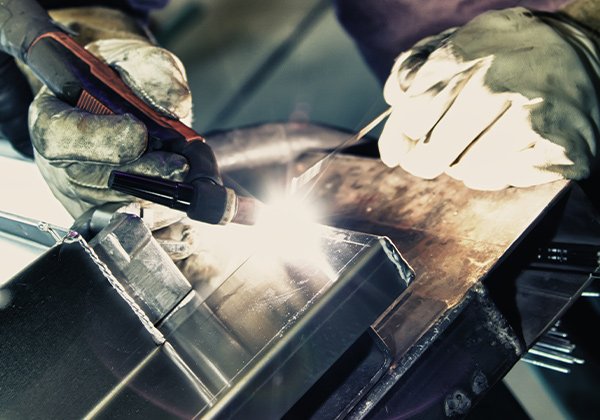
- Smooth, ground welds at each corner, since rough welds create rust starting points
- Pre-drilled mounting patterns matching popular charger brands
- Multiple cable entry sizes fitted with rubber grommets for a watertight seal
Beyond the basics, check what a custom EV charger enclosure manufacturer can offer:
- Ventilation options for high-power chargers that generate heat
- Branded colors, logos, and custom RAL color matching
- Lock types, such as key locks, padlock hasps, or electronic access
- Internal mounting rails or brackets for accessories
- Sealed viewing windows for LED status lights
A few warning signs point to a factory worth avoiding:
- Cannot provide salt spray test reports from an independent lab
- Refuses to send sample units before a large order
- Cannot show CAD drawings of past projects
Before placing an order, ask your supplier:
- What is your standard powder coating thickness?
- Do you run salt spray tests on coated parts, and can you share the report?
- What is your lead time for a custom order with logo and color?
- Can you provide references from past importers?
- Do you offer pre-shipment inspection through a third party such as SGS?
Quality Control Checklist for Importers
Before production:
- Approved CAD drawings with all dimensions signed off
- Material certificates for steel grade, coating, and gasket
- Confirmed powder coat color and gloss level
- A sample unit kept as the production reference
During production:
- Dimensional accuracy within about 1mm on key mounting features
- Coating thickness of at least 60 to 80 microns, checked with a magnetic gauge
- Adhesion test results
- Even gasket compression around the door
- Smooth lock operation
Before shipment:
- Salt spray test report of at least 500 hours for coated steel
- Visual inspection for scratches or coating defects
- Confirmed packaging with foam protection and moisture barriers for sea freight
JUTFBOX – Your Manufacturing Partner
When sourcing outdoor EV charger enclosures from China, match the material and features to the site, using powder-coated cold-rolled steel for standard outdoor use, 304 stainless steels for coastal installs, and hot-dip galvanized steel for heavy industrial sites. Confirm test reports, request samples, and audit the factory before committing to a bulk order.
Jutfbox manufactures custom EV charger enclosures to these exact standards and ships to customers worldwide. Contact us today for a free quote on your project.
Frequently Asked Questions
Where are outdoor EV charger enclosures used?
Outdoor EV charger enclosures are used at homes, apartment complexes, public charging stations, commercial properties, fleet depots, industrial sites, schools, hospitals, and government buildings, anywhere a charger needs protection from weather, impact, or tampering.
Which material suits a coastal EV charger enclosure?
A coastal EV charger enclosure suits 316 stainless steel or hot-dip galvanized steel, since powder-coated carbon steel can corrode within two to three years in salt air.
What is the typical lead time from China manufacturers?
Lead time from China manufacturers runs 15 to 25 days for standard designs and 30 to 45 days for custom designs with tooling. Sea freight to US or EU ports adds another 30 to 40 days.
What is the minimum order quantity?
The minimum order quantity is usually 50 to 100 units for standard sizes and 200 to 500 units for custom designs, though many factories accept smaller sample orders at a higher per-unit cost.
How do I verify enclosure quality before ordering?
To verify enclosure quality, request salt spray and coating test reports from an independent lab, ask for material certificates, order samples first, and arrange a factory audit or third-party inspection for larger orders.