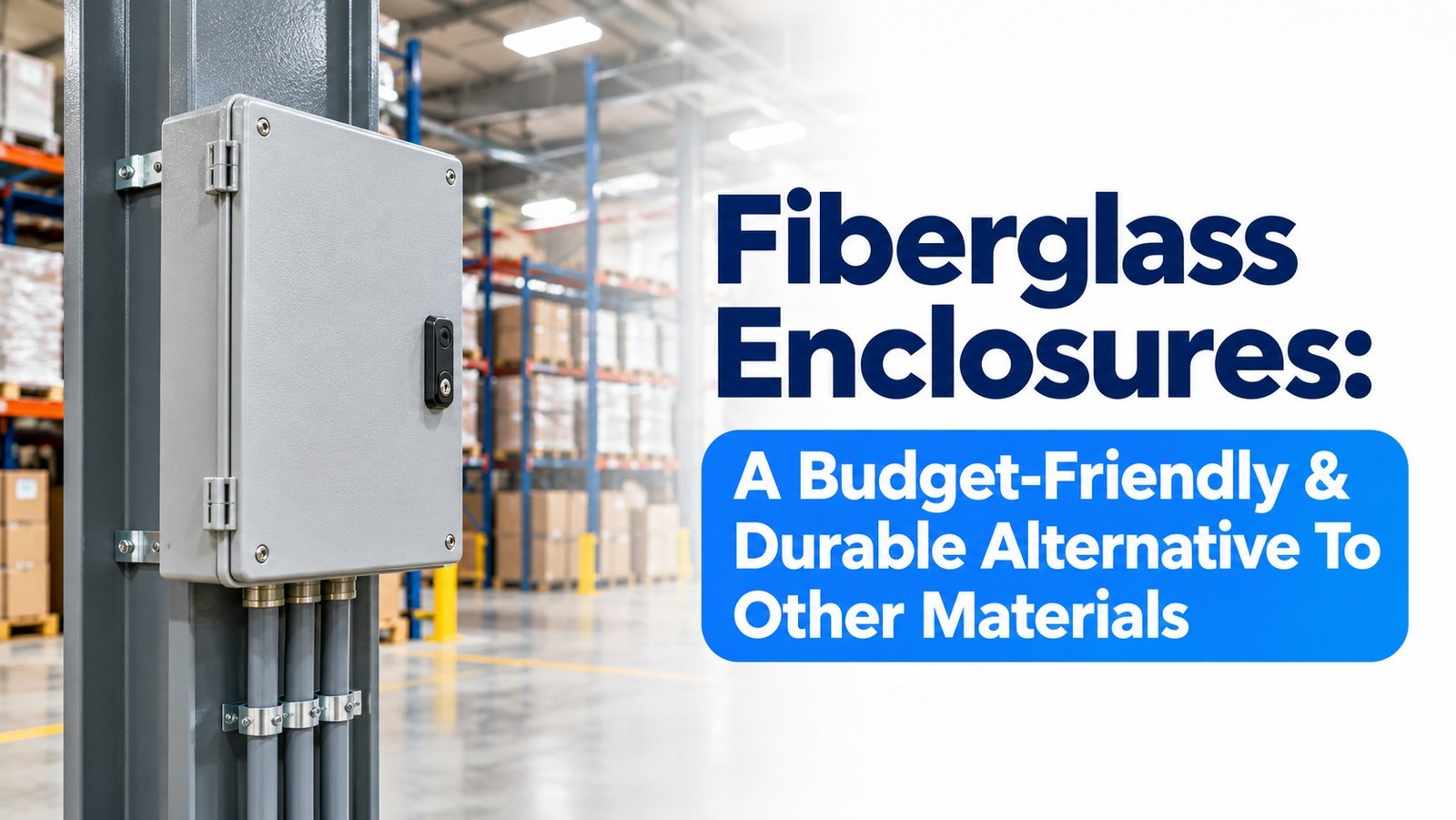
Fiberglass enclosures are light, rust-free boxes that protect electrical equipment in wet, outdoor, and chemical-heavy places, and they usually cost less than stainless steel. They are also sold as GRP/FRP electrical enclosures, since the same molded material goes by glass-reinforced polyester and fiber-reinforced polyester, and it keeps working in conditions that slowly eat through painted steel.
In this guide, you will learn where the savings come from, how fiberglass handles sunlight and heat, and how it compares with stainless steel, polycarbonate, and painted steel. You will also see when another material is the better pick, so you can choose with the whole picture in front of you.
Key Takeaways
- Fiberglass enclosures usually cost less than stainless steel and more than painted carbon steel, so they suit damp, outdoor, and chemical sites.
- A fiberglass box weighs far less than a steel one of the same size, so it costs less to ship and is easier to lift, mount, and drill.
- The material doesn’t rust or conduct electricity, though the equipment inside still needs to be grounded.
- Years of strong sunlight can roughen the surface (called fiberbloom), and UV-stabilized resin and some shade help the box keep its finish.
- Fiberglass holds heat in, so hot sites may need a vent or fan, and metal is the better pick when heat release or EMI shielding matters.
- The best value comes from the total cost over the box’s life, since the purchase price is only one part of it.
What Are Fiberglass Enclosures?
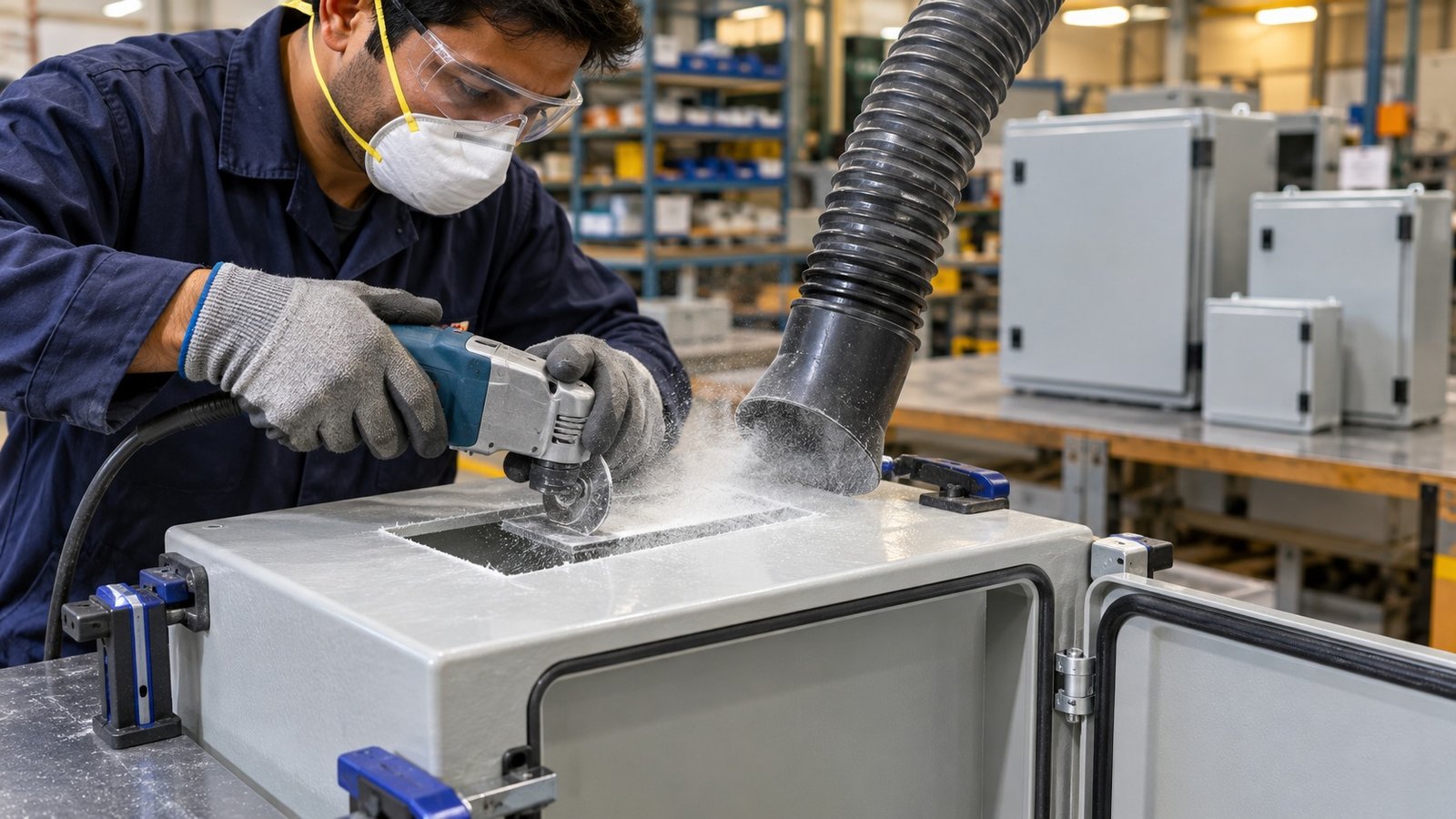
Fiberglass enclosures are boxes and cabinets molded from polyester resin strengthened with fine glass fibers, and they house equipment such as control panels, meters, switches, and terminal blocks. GRP and FRP describe the same material: GRP means glass-reinforced polyester, and FRP means fiber-reinforced polyester, so searching either term leads to the same family of non-metallic enclosures.
Why Fiberglass Enclosures Are Cost-Effective
In terms of purchase price, fiberglass sits in the middle of common enclosure materials: painted carbon steel costs the least, fiberglass and polycarbonate cost more, and 304 and 316 stainless steel cost the most. Prices change with size, order quantity, and supplier, so treat this as a general order and ask for a quote on your exact size.
The biggest savings often appear after installation because corrosion is expensive. In 2016, NACE International’s IMPACT study, reported by Engineering.com, estimated that corrosion costs the world about US$2.5 trillion a year, roughly 3.4% of global GDP. The same study said corrosion management best practices could save US$ 375 billion to US$ 875 billion. That covers all industries and gives no price for one enclosure, yet a box with no rust to repair and no paint to touch up can cost less to own in salty or chemical air.
Weight adds to the savings, since a steel enclosure of the same size can weigh about four times as much as a fiberglass one, lowering freight costs and letting one person hang the box on a wall or pole. On-site changes cost less too, because fiberglass can be drilled or cut with ordinary tools, while stainless steel is much harder to cut and painted steel needs touch-up paint afterward.
Cost Factor | How Fiberglass Compares |
Purchase price | Costs less than stainless steel and more than painted carbon steel |
Shipping and lifting | Much lighter than steel |
Painting | Color is molded into the material, so no painting is needed |
Rust | Does not rust in wet, salty or chemical sites |
New holes | Easier to drill or cut than stainless steel |
Grounding | Body does not conduct, though equipment inside still needs a ground |
How Fiberglass Handles Sun, Weather and Heat
Fiberglass handles rain, snow, humidity, salt air, and many chemicals without rusting, which is why it is common in water treatment plants, solar sites, telecom cabinets, and coastal installations. Sunlight is the main thing that changes the box over the years, because ultraviolet (UV) light slowly wears away the protective resin layer called the gel coat. After long exposure, the glass fibers can show through as a rough, whitish surface known as fiberbloom.
A bloomed box usually keeps working and keeps its seal, yet it is harder to clean, and the exposed fibers can irritate bare skin, so gloves and a closer look during routine checks are sensible. Buyers can slow the process by asking for UV-stabilized resin and a good gel coat, and by placing the box in shade when the site allows it.
No single lifespan number fits all sites, because climate, resin quality, and sun exposure change how long a box keeps its strength and looks. Fiberglass and polycarbonate makers each claim longer outdoor life, so ask for UV test results or warranty details on the model you plan to buy.
Fiberglass also insulates, slowing outside heat and cold from moving in and keeping heat out of the equipment inside the box. A box in direct sun gets warmer, and a darker color absorbs more sun than a lighter one, so a light color, some shade, and a vent or fan can keep temperatures in check.
Fiberglass vs Stainless Steel vs Polycarbonate vs Painted Steel
The table below shows where each material fits best.
Material | Where It Fits Best |
Fiberglass | Wet, outdoor, salty or chemical sites, wall or pole mounting, and budget-focused projects |
316 stainless steel | Seawater, marine and high-chemical sites that need the best metal corrosion resistance |
304 stainless steel | General outdoor use and washdown areas |
Polycarbonate | Small instrument and junction boxes, clear doors, and sites with hard knocks |
Painted carbon steel | Dry indoor rooms where the lowest cost matters most |
Polycarbonate is the usual pick for small instrument boxes because it resists hard knocks, cuts cleanly, and can have a clear door. Stainless steel suits places that need strength, heat release, or protection from vandals, and 316 handles seawater better than 304, although both cost more than fiberglass. Painted steel is the cheapest indoor option, but it starts to rust when its coating is scratched in wet or salty air.
When Fiberglass Is Not the Best Fit
Fiberglass is a weaker choice where equipment generates a lot of heat because metal conducts heat away while fiberglass retains it. It also gives no protection from radio or electromagnetic interference (EMI) without an added metallic coating, so sensitive electronics may need a metal box.
Where people might hit, climb, or tamper with the box, a heavy stainless steel enclosure is the safer pick, because a hard impact can crack fiberglass. In a dry indoor room, painted carbon steel costs less and works well.
NEMA 4X, IP Ratings and Safe Cutting
Fiberglass can be cut or drilled on site, and the fine dust can irritate skin, eyes and lungs, so wear gloves, safety glasses and a dust mask. Many fiberglass enclosures carry a NEMA 4X rating, which covers rain, hose-directed water and corrosion resistance, and a box does not have to be stainless steel to earn it. The IP code is a similar rating from the IEC, and IP66 means the box is dust-tight and protected against powerful water jets. A rating belongs to the box as it left the factory, so any new cutout must be sealed with a gland or fitting rated to match.
How to Choose a Fiberglass Enclosure
A short checklist keeps the decision simple.
- Look at the site first, including sun, water, chemicals, salty air, and the heat the equipment gives off.
- Ask for UV-stabilized resin, a good gel coat, and a NEMA 4X rating when moisture and corrosion are concerns.
- Choose a size with room for the equipment, the cable bends, and some airflow.
- Pick stainless steel hinges, latches, and screws for harsh sites, since hardware is often the first part to corrode.
- Check the flame rating and temperature range on the datasheet, since the upper limit can depend on the gasket material.
- Compare the total cost over the installation’s life.
Ready to Choose the Right Enclosure?
The right enclosure depends on the site, the heat the equipment makes, sun exposure, and the cost over the full life of the installation. Fiberglass fits well when rust protection, lightweight, and a sensible price all matter together, so if you would like help matching an enclosure to your project, send us your requirements and request a quote today.
FAQs
Are fiberglass enclosures cheaper than stainless steel?
Fiberglass enclosures usually cost less than stainless steel enclosures of the same size and more than painted carbon steel ones, and the exact gap depends on size, quantity, and supplier.
How long do fiberglass enclosures last outdoors?
Fiberglass enclosures can last many years outdoors because the material doesn’t rust, and sunlight is the main factor that ages them, so UV-stabilized resin and some shade help them maintain their finish.
Do fiberglass enclosures rust or corrode?
Fiberglass enclosures do not rust because they contain no iron, and they resist many chemicals and salt air, although the hinges, latches, and screws may be metal, so choose stainless hardware for harsh sites.
Are fiberglass enclosures safe for electrical equipment?
Fiberglass electrical enclosures do not conduct electricity, so the box adds a layer of insulation, and the equipment inside still needs proper grounding under local electrical code.
Can fiberglass enclosures be drilled on site?
Fiberglass enclosures can be drilled or cut with ordinary tools, and the work calls for gloves, safety glasses, and a dust mask, followed by sealing each opening with a rated gland or fitting.