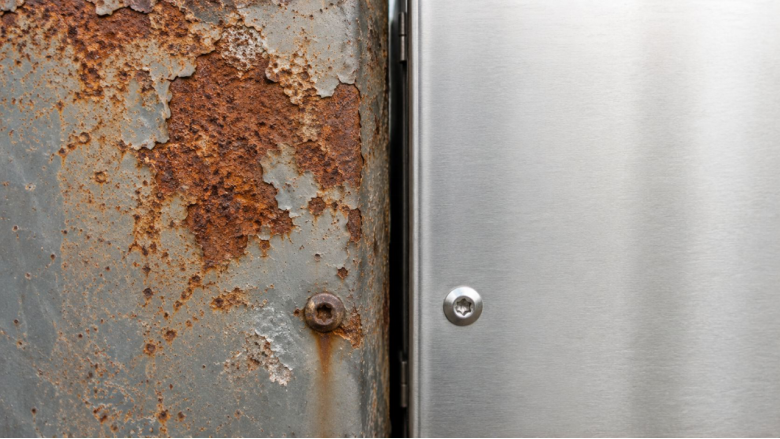
Wall Mount Metal Enclosures: Space-Saving Designs for Industrial Control and Power
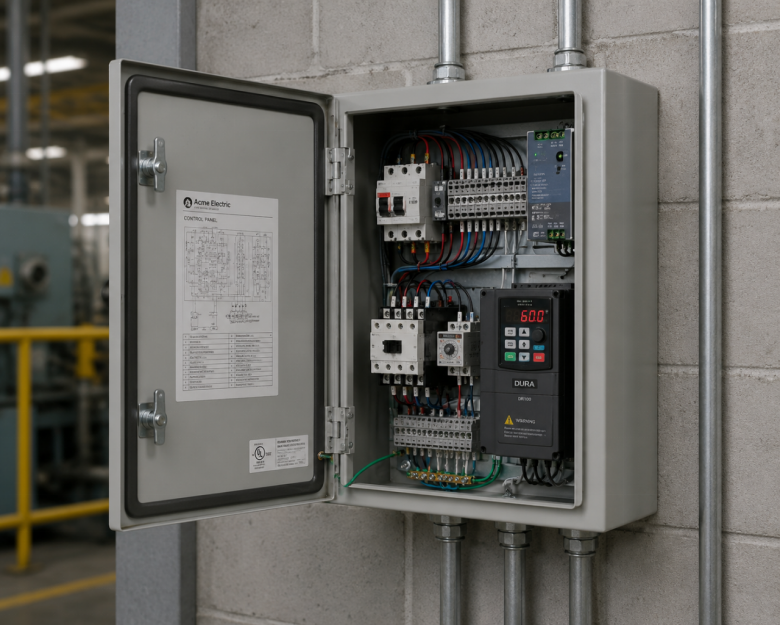
Wall mount metal enclosures help facility managers and industrial procurement teams maximize floor space, deliver long-term product maintenance, and potentially save money.
NEMA-rated wall mount enclosures specifically, when designed, instaled, and maintaned appropriately, could be a straightforward space-saving addition to your business operations.
Given there are many types of wall mount metal enclosures and there are lots of things to consider in the design and instalation process, this guide walks you through what you need to know.
We cover electrical enclosure sizing and depth considerations, thermal management challenges, and the importance of door design.
We also emphasize the vital decision you must make when choosing the most appropriate material, and why IP-rated enclosures from a trusted supplier like SKKBO are the way to go.
Why Wall Mount Enclosures Dominate Industrial Layouts
There’s pressure on facility managers to maximize floor space in industrial environments. For many applications, wall mount metal enclosures provide a more efficient solution than traditional floor-standing cabinets. This is particularly true where control systems are compact or distributed via a facility.
We’re seeing more managers incorporate control panels, power distribution systems, and safety equipment into compact spaces to optimize space. The most glaring benefit is saving floor space, regularly mentioned in the wall mount vs floor-standing cabinets debate.
After all, wall-mounted designs utilize vertical wall areas that would otherwise be unused, freeing valuable floor space for production, material storage, and handling systems.
Reducing the enclosure footprint in manufacturing plants already close to capacity can have a significant impact on productivity and the bottom line.
Another, sometimes-overlooked benefit is that shorter cable runs can reduce installation costs and complexity. This process can also reduce concerns about voltage drop, while maintenance teams find it easier to trace faults in shorter, more organized cable runs.
It’s clear, then, to see why wall mount enclosures have become the preferred choice of industrial procurement teams and factory managers. They save space, allow for shorter cable runs, and minimize voltage drop concerns on the faculty floor.
Sizing, Depth, and Door Design: Beyond the Catalog Dimensions
To choose the most appropriate wall mount enclosure, you need to look beyond height, width, and depth specifications.
A common design flaw is concentrating too much on external dimensions while overlooking the internal space needed for components and wiring. This is known as the depth trap.
Depth Selection
Internal clearance is needed for circuit breakers, terminal blocks, variable frequency drives (VFDs), and cable bends.
So, when planning for an enclosure, you need to consider its usable depth, or the actual clearance available after accounting for all instaled equipment, cable management accessories, and hardware, to avoid components from protruding through. Often, these components require extra space for wiring terminations and safe cable bend radii.
Identifying the right depth at the design stage is vital as it will save you from costly modifications down the line, when you realize that your initial calculations were based exclusively on external dimensions.
Door Design
Just as important in the planning phase is the door design. A shallow door will likely interfere with protruding components or wiring bundles, making it much more difficult to install or service the device.
Hinged doors are a viable option in industrial settings, offering quick, easy access while remaining attached. Lift-off doors are also used and provide good access for technicians working in confined spaces or where extensive maintenance and servicing are required.
An appropriate door configuration significantly improves accessibility, reduces service time, and ensures that crucial components are easily accessible for inspection.
Crucial Design Considerations for Optimal Instalation
Before instalation, always consider the enclosure depth and the optimal door. Below are elements of the design and the engineering impacts you can expect from each decision:
|
Design Aspect |
Engineering Impact |
|
Shallow enclosure depth |
Restricts cable routing flexibility and limits clearance for larger electrical components |
|
Increased exposure depth |
Improves airflow, simplifies wiring management, and accommodates component expansion |
|
Single-door construction |
Provides cost-effective access and efficient operation for compact systems |
|
Double-door construction |
Improves accessibility, supports broader equipment layouts, and distributes door loads more effectively |
|
Removable doors |
Enables unrestricted equipment access, reducing installation time and maintenance difficulty |
Material Selection and Environmental Ratings: NEMA-Rated Wall Mount Enclosures
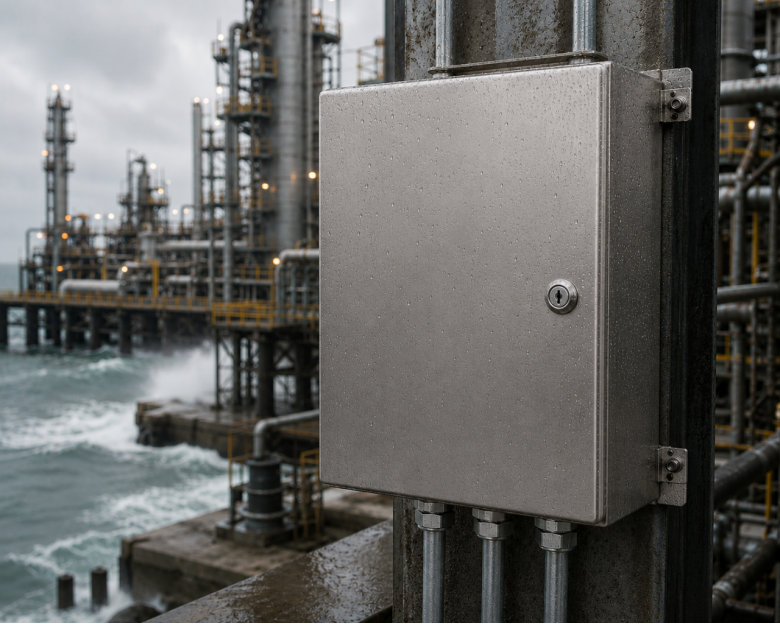
Choosing highly durable NEMA-rated wall mount enclosures is smart, but it’s not as simple as picking a highly durable material and expecting a flawless design. Here’s what you need to know about material selection, protection ratings, and thermal management:
Material Selection
You need to think carefully about the material of your chosen wall mount enclosure. Options include:
- Powder-coated carbon steel is often used for indoor applications because of its strength, durability, and cost-effectiveness.
- Galvanized steelis commonly used for outdoor base applications due to its improved corrosion resistance.
- 304 stainless steelis common for outdoor and washdown environments, while it’s a safe choice for food processing facilities.
- 316 stainless steel is perfect for coastal and highly corrosive environments where salt, moisture, or aggressive chemicals are present.
A word on enclosure ratings. NEMA ratings indicate an electrical enclosure’s ability to protect sensitive equipment. They’re vital for workplace safety and preventing equipment failures.
NEMA’s scale ranges from 1 to 13 for most enclosures, with 4X being a highly adaptable option that can protect equipment from damaging environmental conditions.
Crucially, NEMA ratings address not only materials but also sealing, door design, testing, and maintenance. An enclosure only attains 4X if it has been designed, tested, and maintained to this standard.
The table below indicates the scale for each material type, with typical NEMA ratings shown, which may help you decide which to use:
|
Material Type |
Typical NEMA Rating |
|
Powder-coated carbon steel |
Ratings range from NEMA 1 to NEMA 4, depending on design |
|
Galvanized steel |
NEMA 1 to 4X |
|
304 stainless steel |
NEMA 4X |
|
316 stainless steel |
NEMA 4X |
Protection Ratings – IP-Rated Enclosures
Protection ratings, namely NEMA 4X and IP66, are often more critical than material selection, because they verify an enclosure’s ability to resist dust, corrosion, and water damage under standardized testing conditions.
A 316 stainless steel wall mount enclosure without appropriate sealing could perform less optimally than a properly certified option constructed from less expensive and resistant materials. This is vital to understand.
Also, multi-point latching systems play a fundamental role in maintaining a consistent seal around the enclosure door, and must not be overlooked in the design phase. They help achieve and maintain the required protection rating.
Thermal Management
Don’t overlook thermal management, either. Higher sealing levels improve environmental protection, but crucially, can restrict airflow and trap heat generated by electrical equipment.
Engineers and designers must balance ingress protection with cooling requirements to avoid excessive internal temperatures. Above-average temperatures can reduce equipment durability and may even pose a fire risk.
Internal Layout: Mounting Plates, Cable Entry, and Thermal Management
The interior of industrial wall mount enclosures needs consideration across the following factors:
Detachable Mounting Plates
Deatchable mounting plates are an invaluable feature in industrial applications. Though internal installation is possible, it’s good practice for technicians to mount and wire circuit breakers, PLCs, and power blocks on a detachable plate at a workbench.
After assembly and testing, the populated plate can be installed within the enclosure, reducing instalation time and enhancing the quality of the wiring.
Cable Entry
The cable entry design is another important consideration. While the norm in outdoor settings is bottom cable entry to avoid water ingress, gland plates are effective in internal enclosures. Gland plates provide secure, sealed entry points while helping to maintain the enclosure’s environmental protection rating.
Don’t forget to think about the location of cable entry, too. This affects serviceability and maintenance, as well as future expansion capacity.
Thermal Management
Heat management is particularly important when enclosures contain VFDs, power supplies, and any other heat-generating equipment.
In outdoor environments, sunlight exposure may also impact the enclosure, so optimal placement is vital. Viable thermal management steps include:
- Passive ventilation – Uses natural convection and is suitable for lower heat loads.
- Filtered (active) ventilation – Improves airflow and reduces dust ingress.
- Fan-assisted cooling – Provides active air circulation for moderate heat loads.
- Heat exchangers – Used for high-power equipment or enclosures in harsh environments.
- Enclosure placement – Outdoors, avoid placing the enclosure in direct sunlight – keep it in ambient conditions away from the sun.
Wall Mount vs Floor-Standing Cabinets: Making the Right Choice
Weighing up a wall mount vs floor-standing cabinets depends on use case. The size, weight, and complexity of an electrical system will determine which is optimal, and there are several things to consider to help you make the right choice.
Wall mount enclosures are typically ideal for compact control systems, distributed automation networks, and machine-level controls. They’re effective in units and facilities where wall space is readily available and floor space is limited.
When enclosures are placed close to the equipment that they serve, engineers can efficiently reduce cable runs, simplify the installation process, and improve maintenance accessibility – all vital time and cost-saving measures that can boost production.
Common examples include machine-side control panels, local disconnect stations, and junction boxes, but there are lots of use cases out there. Wastewater treatment facilities often rely heavily on wall mounted enclosures for pump controls and remote monitoring, for instance.
Conversely, floor-standing cabinets are worth considering for larger installations with heavier equipment or those with extensive power distribution components. Floor-mounted designs are also sometimes preferred for their cable management capacity and better structural strength, even though they take up more space.
In reality, facility managers often go for a combination of wall mount enclosures and floor-standing cabinets, particularly in larger factories. There are merits to using both, particularly in machine-heavy environments with different uses.
Conclusion: Opt for Long-Term Reliability With JUTFBOX
When choosing wall mount enclosures, several factors influence long-term reliability. Beyond external dimensions, you must think about material selection, environmental ratings, and thermal management to ensure an enclosure that truly lasts in the long run.
Engineers must not only consider the current equipment requirements, but also future maintenance, expansion, and operating conditions. A properly-sized enclosure that’s adequately sealed can protect your facility’s critical electrical elements and systems, while potentially minimizing downtime and reducing long-term costs.
Jutfboxhas over two decades of enclosure management expertise and export our products to over 180 countries. In the last three years alone, we’ve developed more than 200 products for overseas customers, highlighting our adaptability and the trust our clients place in our solutions.
Our engineers provide practical support and specification guidance to ensure customers choose the most appropriate solutions tailored to their manufacturing plant or facility.
Consult an expert JUTFBOX engineer today to discuss your project requirements or request a custom enclosure quote tailored to your application.