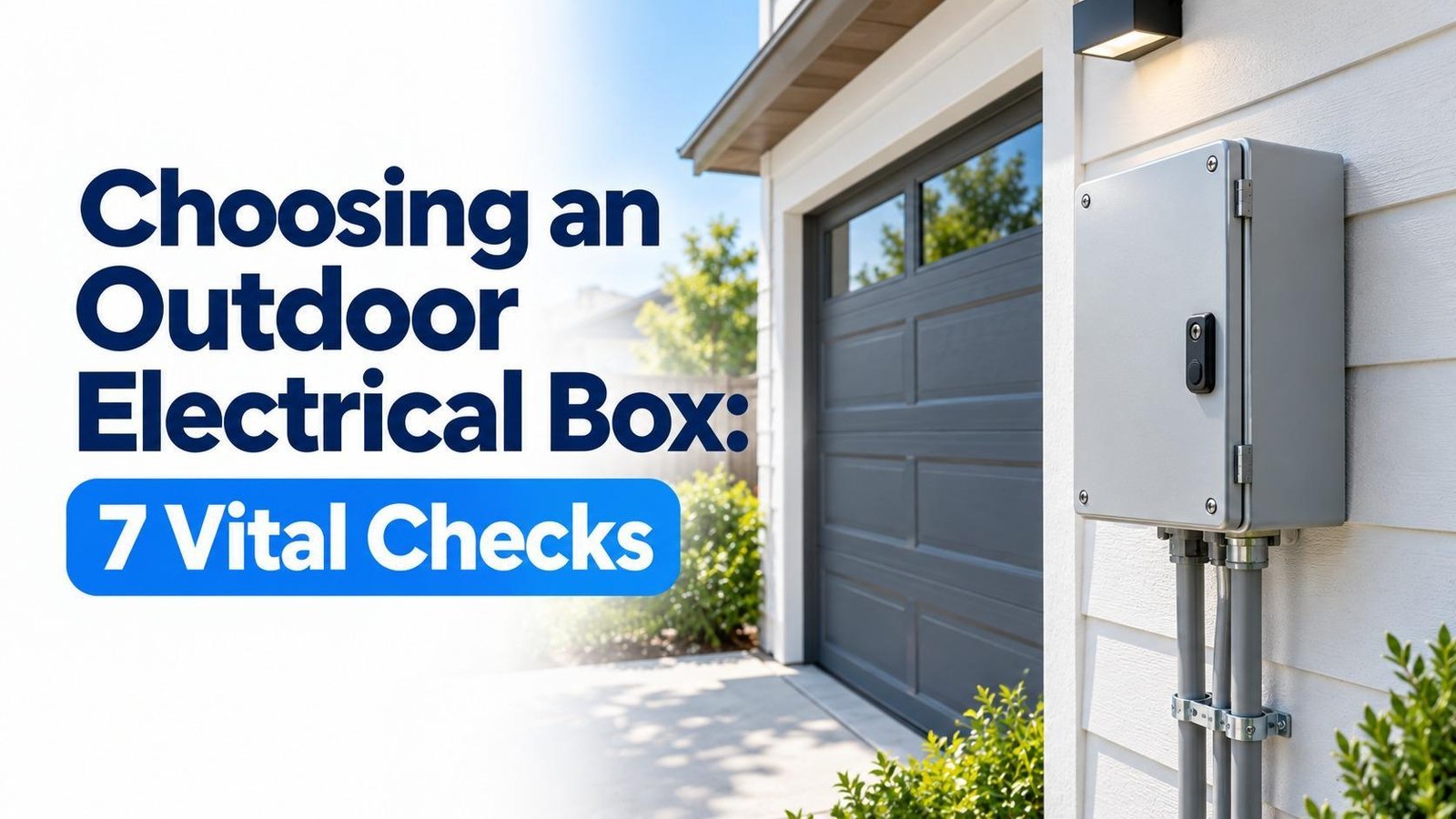
An outdoor electrical box faces harsh weather, including rain, UV rays, salt air, and sharp temperature swings, from day one. Choose an outdoor electrical box by matching its build to the weather conditions.
Seven checks follow, covering site conditions, IP and NEMA ratings, materials, sizing, heat and condensation, cable entry, and mounting. We have created a buyer checklist at the end that helps you finalize your pick.
Key Takeaways:
- Check the site first, since sun, rain, salt, dust, and temperature swings decide the rest.
- IP65 is the outdoor baseline. Go IP66 for driving rain and IP67 where flooding is possible.
- In North America, look for NEMA 3R, 4, or 4X instead.
- Choose 316 stainless steel near the coast and galvanized steel for most other sites. UV-stabilized polycarbonate does not rust.
- Leave 20-30% of the space inside spare for future expansion.
- Plan for heat and condensation, and use sized cable glands instead of drilled holes.
Check 1: Start with the site, not the box
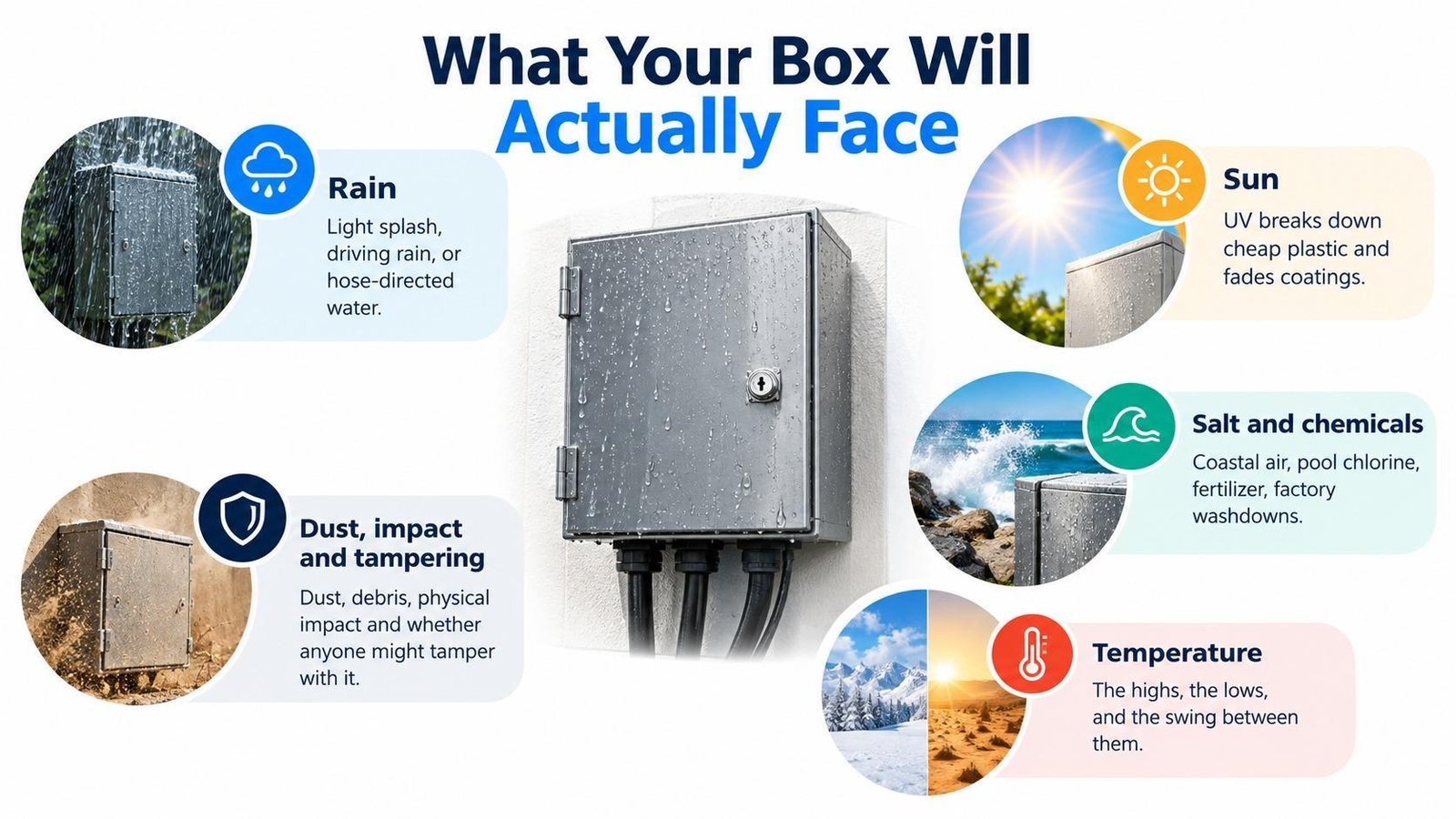
“Outdoor” is not just an outside environment. To understand this, consider a box under a porch tolerating damp air and the odd splash, a rooftop box bakes in the summer sun, a coastal box breathes salt every day, and a roadside box eats dust and vibration. These are common examples of the conditions an electrical box generally faces outdoors.
Check 2: Match the IP rating to the weather
The IP code, defined by IEC 60529, uses two digits. The first rates dust protection, the second rates water. For outdoor boxes, focus on the second digit, which does most of the work.
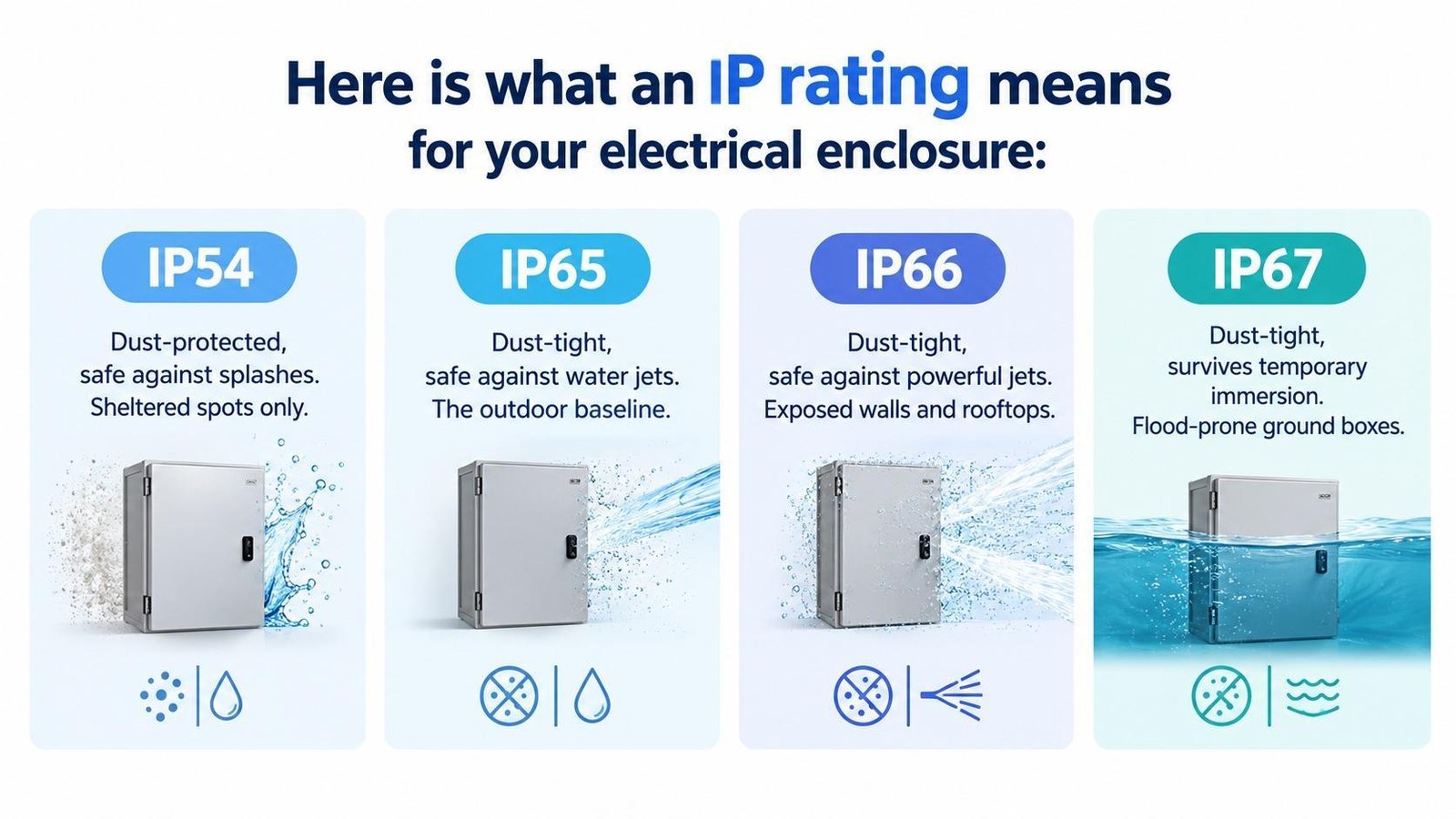
One warning. A higher number is not automatically better, because a sealed IP66 box can trap heat and condensation inside. Match the rating to the exposure, then solve heat separately. Our IP66 junction box guide goes deeper.
Check 3: Know the NEMA system
Based in the US or Canada and looking to buy electrical boxes for the field? You will see NEMA ratings instead. NEMA 250 defines them, and the tests cover more than dust and water; corrosion, ice, and construction quality count too.
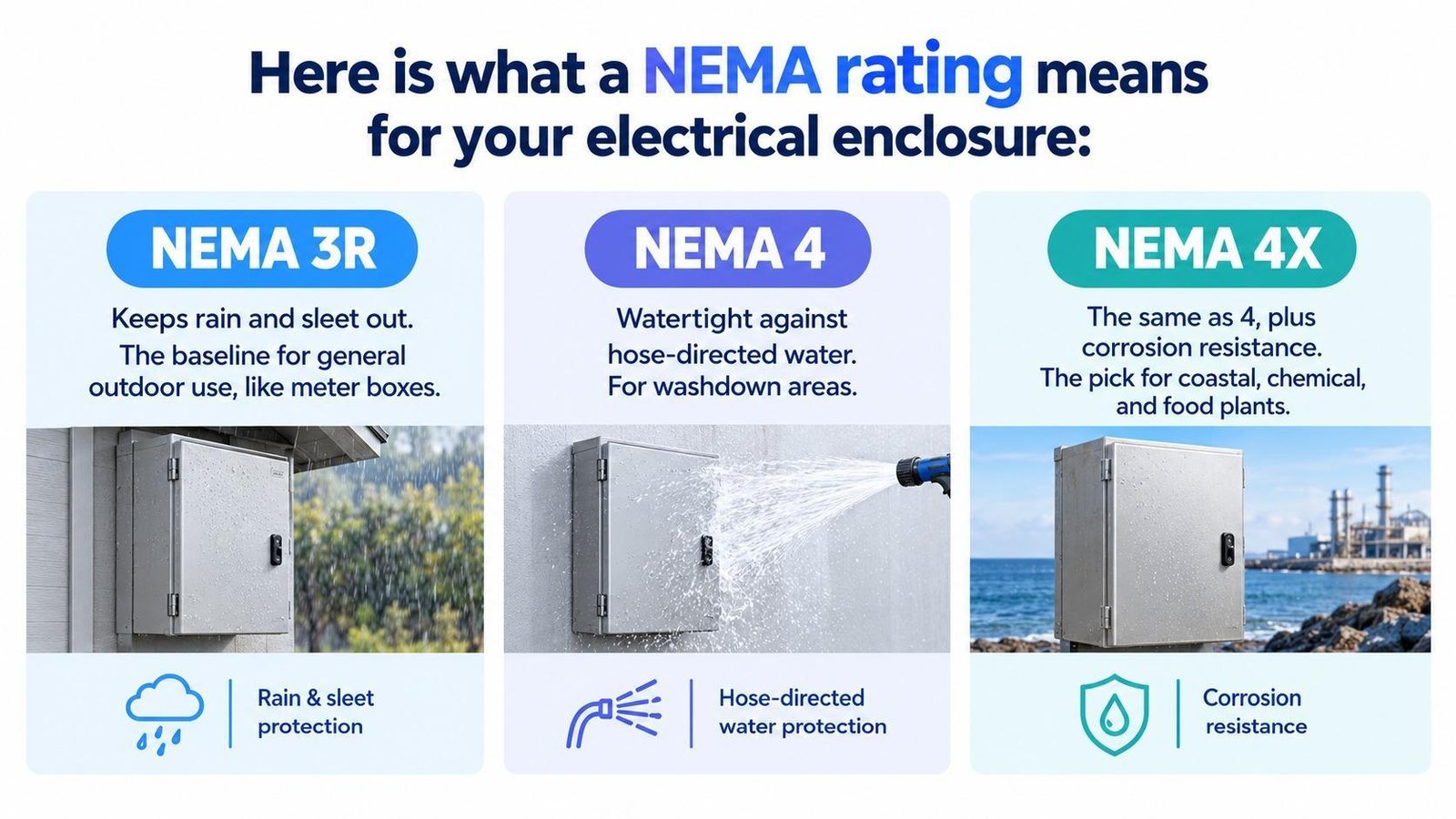
As a rough crosswalk, NEMA 3R sits around IP54 territory and NEMA 4 or 4X near IP66. Treat these as approximations, not equals. The NEMA type definitions are the final word.
Check 4: Pick the material for your climate
Material decides how long the box lasts. Here is what each option means outdoors.
Material | Category / Overview | Key Characteristics & Best Use Cases |
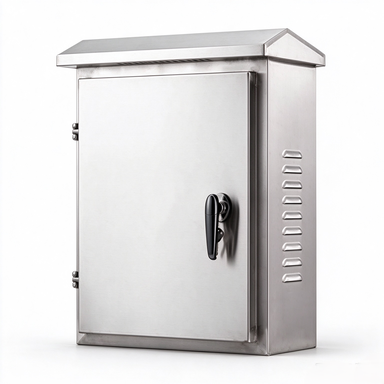
Stainless Steel | The premium choice | Grade 304 handles most outdoor sites. Grade 316 adds molybdenum to resist chlorides in sea air and pool areas, which makes it the coastal standard. It costs more and weighs more, but outlives the other options in harsh sites. |
Cold-Rolled Steel | Strong and economical | Strong, cheap, and easy to fabricate. It rusts quickly outdoors, so it needs a proper powder-coated finish. Any scratch or drilled hole breaks the protection. Best for sheltered or budget projects. |
Galvanized Steel | Solid middle choice | Cold-rolled steel with a zinc coating that sacrifices itself to slow rust. Tougher outdoors than painted steel and cheaper than stainless. The coating still wears thin in coastal air. |
Polycarbonate and ABS | Plastic enclosures | Doesn’t rust, insulates on its own, weighs little, and doesn’t block wireless signals. ABS suits sheltered spots. Polycarbonate needs UV stabilization to stop the sun from turning it brittle, and UV-stabilized versions handle full exposure. |
Fiberglass | Specialized environments | Fiberglass shrugs off chemicals and salt, and shows up often in industrial plants and marinas. |
Check 5: Size it for today and tomorrow
List everything going inside: terminals, breakers, power supplies, relays, a controller. Leave room for wiring bends and a screwdriver. Then add 20-30% spare space.
A box that is full on day one is the most common sizing mistake, indoors or out. Two years later, someone adds a surge protector or a second circuit, and there is no room. Spare space costs little, whereas a full replacement costs a lot. Our consumer box-sizing guide uses the same logic for indoor installations.
Check 6: Plan for heat and condensation
A sealed box blocks weather and also traps heat. Power supplies and transformers warm the air inside, and direct sun can push internal temperatures far past the weather report. If the heat load is high, size up, add a sun shield, or use rated vents. Never cut an open hole for airflow. You just threw away your IP rating.
Condensation is sneakier. Humid air gets in, night falls, and water forms on cold metal. In damp climates, a small anti-condensation heater or a pressure-equalization vent solves it. Remember: IP66 does not mean condensation-proof.
Check 7: Cable entry and mounting
Every hole you make is a leak waiting to happen.
- Use proper cable glands matched to your cable diameter, not a drilled hole and hope.
- Enter from the bottom where you can. Rain runs down, not up.
- Seal unused entries with rated blanking plugs.
- Use external mounting feet instead of drilling through the sealed back wall.
5 common mistakes when choosing an outdoor electrical box
- Buying by IP number alone. The rating says nothing about UV, corrosion, or heat.
- Using 304 stainless near the coast, chlorides pit it. You need 316.
- Drilling extra holes on site. Every unsealed cutout voids the rating.
- Ignoring condensation. Sealed boxes still get wet inside.
- Chasing the lowest price. A failed box costs a service call, downtime, and a replacement. In reality, cheap is expensive.
Outdoor electrical box buying checklist
- Site hazards listed (rain, sun, salt, dust, temperature)
- IP65 minimum; IP66 or IP67 for harsh exposure
- NEMA 3R, 4, or 4X confirmed for North American projects
- Material matches climate (316 coastal, galvanized general, polycarbonate rust-free)
- UV stabilization confirmed for plastic boxes
- 20 to 30 percent spare space inside
- Heat load checked; vents or sun shield added if needed
- Cable glands sized to cable diameters
- Bottom entry planned; unused holes plugged
- Certifications checked: IEC 60529 test reports, NEMA 250, or a UL 50E listing
Final thoughts
Choosing an outdoor electrical box is not about the highest IP number or the toughest metal. It is about matching seven things to your site: exposure, rating, material, size, heat, cable entry, and mounting.
Get those right, and the box will sit on the wall and work in silence for years.
Need a weatherproof box for your project? Browse the JUTF range or send us your spec for a quote. Tell us the site conditions, and we will match the box to the job.
FAQs
What IP rating do I need for an outdoor electrical box?
Go for IP65 at least. It is dust-tight and handles water jets from any direction. For driving rain, washdowns, or powerful jets, step up to IP66. Choose IP67 only if the box could sit in standing water, such as a ground-level spot that floods.
Is stainless steel or galvanized steel better outdoors?
It depends on the site. Galvanized steel costs less and suits most general outdoor locations. Stainless steel, especially grade 316, is the better pick for coastal air, pool areas, and chemical exposure, where zinc coatings wear out fast. For sheltered budget projects, powder-coated cold-rolled steel can be enough.
Can I use an indoor electrical box outside?
No. Indoor boxes are usually IP40 or lower, built for dry rooms. Outdoors, rain and condensation will reach live parts. An outdoor box needs at least IP65, UV-resistant material, corrosion-proof hardware, and sealed cable entries. An indoor box outside is a safety risk, not a saving.
What is the difference between NEMA 4 and NEMA 4X?
Both keep out hose-directed water and dust. NEMA 4X adds corrosion resistance, so the box material itself must survive salt, chemicals, and weathering. For coastal sites, food plants, or any corrosive environment, 4X is the standard choice. For ordinary wet locations, NEMA 4 is enough.
How do I stop condensation inside an outdoor electrical box?
Condensation forms when humid air touches surfaces cooled overnight. Sealing alone does not stop it. Use a small anti-condensation heater, a pressure-equalization vent, or moisture absorbers. Mount the box off the cold ground, and use a bottom cable entry to keep less moist air inside.